




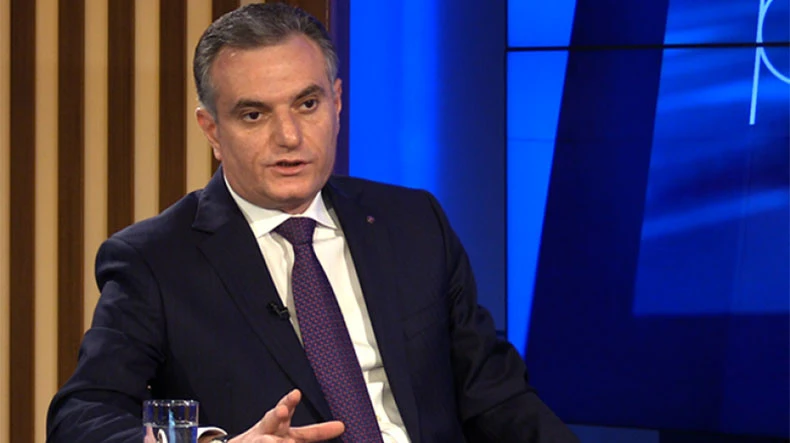
Artak Zakaryan writes on his Facebook page. "From Turkey to Saudi Arabia and from Azerbaijan to Kazakhstan, countries act the same way. They are diversifying their foreign policy, which in this case can be called multi-vector. The explanations for this trend are different, but mostly depend on international events. I think one of the reasons may be that the US is no longer considered the only global and most responsible power, because since the beginning of the 2000s it has conducted an ineffective policy in Iraq, Libya and Syria, which has had a bad effect on its reputation in the Middle East. and beyond its borders. The end of American political hegemony is connected with the rise of other powers, mainly China, Russia and India, which are increasingly appearing as alternative centers of geopolitical influence.
In my opinion, the balance of power in Eurasia is also beneficial to the collective West. In such a situation, conventionally speaking, "small and medium" countries have the opportunity to conduct a relatively independent foreign policy in order to diversify their policy, partners and allies. In essence, multi-vector foreign policy is to avoid geopolitical dependence on one great power in order to be able to maneuver several serious players. between them for their benefit. This requires diplomatic skills as well as economic and political weight. Let's look at the example of the United Arab Emirates, which has not completely abandoned the US, having depended on it for security for decades.
In some areas, Abu Dhabi relies on Beijing, in some areas it prefers Washington, but at the same time it is building closer economic relations with Moscow. In recent years, Saudi Arabia has also pursued such a policy.
It is seeking closer economic and even military ties with China, restoring relations with Iran, but at the same time it is seeking a security agreement with the United States in exchange for normalizing relations with Israel. Riyadh is not abandoning its traditional close relationship with Washington or swapping the US for Russia or China. Instead, the Saudi kingdom, whose security is still largely guaranteed by Washington, prefers a multi-vector policy, and this is helping to boost its prestige and significance in the Middle East.
Diversification of foreign policy is characteristic not only of those countries that traditionally rely on the USA. In Central Asia, Kazakhstan has been maneuvering between Russia and China for more than 30 years. In this case, the USA plays a positive role as an additional balancing player, and this is beneficial to Astana. It tries to avoid excessive dependence on Russia and takes advantage of the fact that Moscow is currently busy in Ukraine. However, not only the large and resource-rich countries of the Middle East and Central Asia are conducting a multi-vector policy. Many smaller states have also joined this game, as can be seen in the examples of Azerbaijan and Georgia. Baku's oil and gas makes Azerbaijan an important country, and it uses this to its advantage in relations with Russia, Iran, Turkey and the West.
Azerbaijan has recently been expanding ties with China, has applied to join BRICS, and has improved its status in the Shanghai Cooperation Organization. He wants to look both west and east while maintaining warm relations with Russia and normal relations with Iran. Another example is Georgia. It has traditionally been considered a pro-Western and anti-Russian country. But today, Tbilisi also pursues a multi-vector policy, at the same time expanding ties with China and Turkey, while simultaneously trying to regulate relations with Russia as well. Turkey is following the same path, as well as Uzbekistan, despite its dependence on Russia. A multi-vector foreign policy implies business and pragmatic relations with various entities, and this is exactly what the countries of Central Asia, South Caucasus and the Middle East want today. Maneuvering between the US or the US and Russia is much more dangerous than maneuvering between multiple states, when none of the leading powers has enough weight and influence to achieve their main diplomatic goals. As the recent history of the Middle East has shown, when a country tries to establish hegemony over the entire region, it very often makes wrong foreign policy decisions and faces resistance from regional countries.
Of course, the diversity of actors does not guarantee the complete success of regional stabilization and may generate new rivalries, exacerbating existing conflicts. But modern multi-vectoring and multi-polarity provide greater advantages and benefits. The growing influence of China, Russia and India, along with the leverage of the West, may lead to the emergence of a new, more stable balance of power in the region. Armenia conducted a multi-vector and balanced foreign policy in terms of its interests. One of the main reasons for bringing Nikol to power was to distort that policy and turn Armenia into a victim and a failed state. Nikol could also have continued Serzh Sargsyan's effective foreign policy and Armenia would not have the growing threats and challenges we all face today. It is still possible. take advantage of the situation in the world and implement a multi-vector foreign policy for the coming years, based exclusively on pragmatic interests and state priorities. But Nikol's government cannot do this for obvious objective reasons. Therefore, Armenia needs to achieve a change of power and return to Serzh Sargsyan's foreign policy and the establishment of a stable, dignified peace. In this way, it will be possible to ensure the safe development prospects of the state.
In my opinion, the balance of power in Eurasia is also beneficial to the collective West. In such a situation, conventionally speaking, "small and medium" countries have the opportunity to conduct a relatively independent foreign policy in order to diversify their policy, partners and allies. In essence, multi-vector foreign policy is to avoid geopolitical dependence on one great power in order to be able to maneuver several serious players. between them for their benefit. This requires diplomatic skills as well as economic and political weight. Let's look at the example of the United Arab Emirates, which has not completely abandoned the US, having depended on it for security for decades.
In some areas, Abu Dhabi relies on Beijing, in some areas it prefers Washington, but at the same time it is building closer economic relations with Moscow. In recent years, Saudi Arabia has also pursued such a policy.
It is seeking closer economic and even military ties with China, restoring relations with Iran, but at the same time it is seeking a security agreement with the United States in exchange for normalizing relations with Israel. Riyadh is not abandoning its traditional close relationship with Washington or swapping the US for Russia or China. Instead, the Saudi kingdom, whose security is still largely guaranteed by Washington, prefers a multi-vector policy, and this is helping to boost its prestige and significance in the Middle East.
Diversification of foreign policy is characteristic not only of those countries that traditionally rely on the USA. In Central Asia, Kazakhstan has been maneuvering between Russia and China for more than 30 years. In this case, the USA plays a positive role as an additional balancing player, and this is beneficial to Astana. It tries to avoid excessive dependence on Russia and takes advantage of the fact that Moscow is currently busy in Ukraine. However, not only the large and resource-rich countries of the Middle East and Central Asia are conducting a multi-vector policy. Many smaller states have also joined this game, as can be seen in the examples of Azerbaijan and Georgia. Baku's oil and gas makes Azerbaijan an important country, and it uses this to its advantage in relations with Russia, Iran, Turkey and the West.
Azerbaijan has recently been expanding ties with China, has applied to join BRICS, and has improved its status in the Shanghai Cooperation Organization. He wants to look both west and east while maintaining warm relations with Russia and normal relations with Iran. Another example is Georgia. It has traditionally been considered a pro-Western and anti-Russian country. But today, Tbilisi also pursues a multi-vector policy, at the same time expanding ties with China and Turkey, while simultaneously trying to regulate relations with Russia as well. Turkey is following the same path, as well as Uzbekistan, despite its dependence on Russia. A multi-vector foreign policy implies business and pragmatic relations with various entities, and this is exactly what the countries of Central Asia, South Caucasus and the Middle East want today. Maneuvering between the US or the US and Russia is much more dangerous than maneuvering between multiple states, when none of the leading powers has enough weight and influence to achieve their main diplomatic goals. As the recent history of the Middle East has shown, when a country tries to establish hegemony over the entire region, it very often makes wrong foreign policy decisions and faces resistance from regional countries.
Of course, the diversity of actors does not guarantee the complete success of regional stabilization and may generate new rivalries, exacerbating existing conflicts. But modern multi-vectoring and multi-polarity provide greater advantages and benefits. The growing influence of China, Russia and India, along with the leverage of the West, may lead to the emergence of a new, more stable balance of power in the region. Armenia conducted a multi-vector and balanced foreign policy in terms of its interests. One of the main reasons for bringing Nikol to power was to distort that policy and turn Armenia into a victim and a failed state. Nikol could also have continued Serzh Sargsyan's effective foreign policy and Armenia would not have the growing threats and challenges we all face today. It is still possible. take advantage of the situation in the world and implement a multi-vector foreign policy for the coming years, based exclusively on pragmatic interests and state priorities. But Nikol's government cannot do this for obvious objective reasons. Therefore, Armenia needs to achieve a change of power and return to Serzh Sargsyan's foreign policy and the establishment of a stable, dignified peace. In this way, it will be possible to ensure the safe development prospects of the state.