





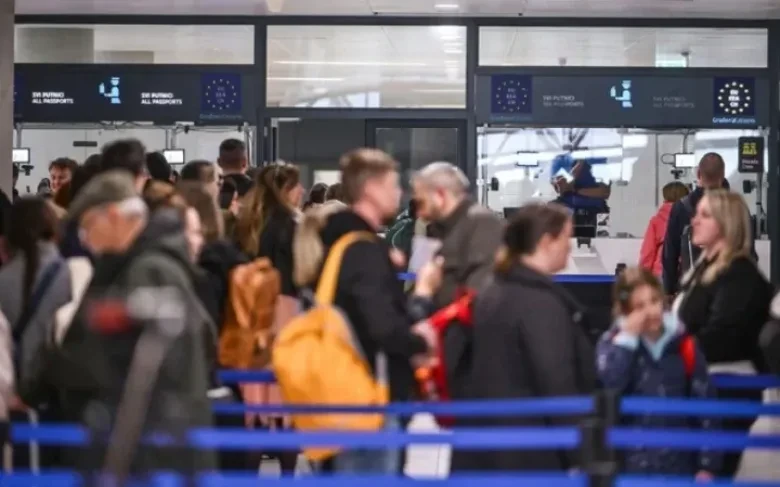
Temporary relaxations of the Entry/Exit System (EES) will end in the EU on September 6. Passengers are being warned that passport checks at the EU's external borders may take longer, Euronews reports.
During the summer, some EU countries had the option to temporarily suspend the collection of biometric data - fingerprints and facial images - if the EES system caused long queues at border crossings.
From September 6, this temporary mechanism will no longer be in place. This means that airports and border services will have less opportunity to simplify biometric checks even in the face of heavy workload.
The EES system will be fully operational on April 10, 2026, after a phased implementation that began in October 2025. The system automatically records the entry and exit of non-EU citizens during short visits.
According to the European Commission, the system has generally been working normally during the summer, but issues with checkpoints where additional technical adjustments are still being discussed with some countries.
According to the International Air Transport Association (IATA), while previously a regular passport check took about 20-25 seconds, with the introduction of the EES it could take about 90 seconds.
A number of European airports have already recorded a significant increase in waiting times. For example, in Frankfurt in July the average waiting time reached about 120 minutes, compared to 60 minutes last year. In Munich, the maximum wait time increased from about 31 minutes to 60, and in Amsterdam from 80 to 120 minutes.
Passengers are advised to allow extra time for border checks when traveling to Europe from September 6 and, if possible, avoid very short transit stops at European airports.