





Fact daily writes:
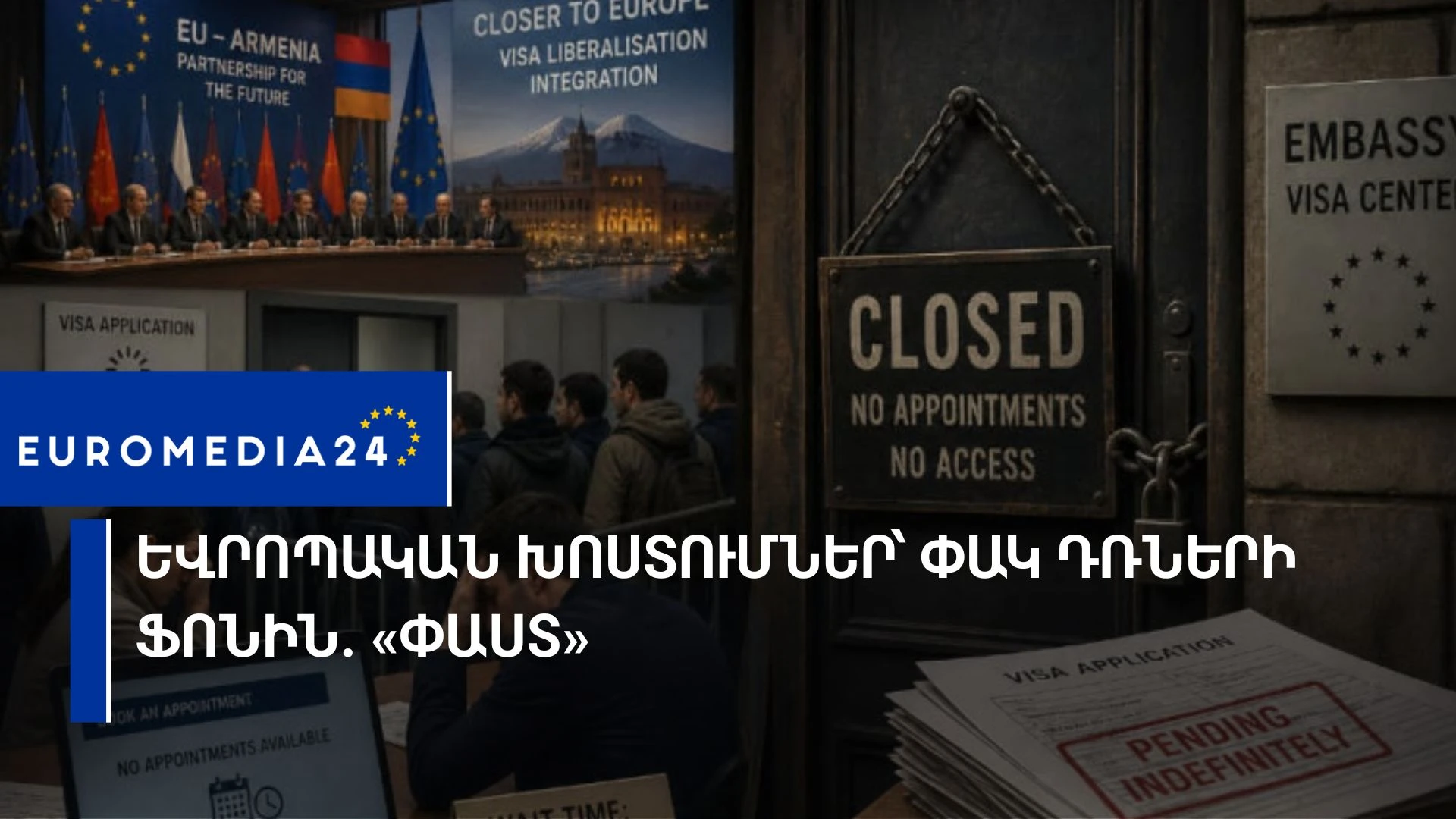
Against the background of high-level European meetings in Yerevan, announcements about visa liberalization and beautiful formulations of integration, the real Armenia lives a completely different reality. What is presented on political platforms as progress and an approach to Europe, for an ordinary citizen has turned into queues, closed joint prisons and an endless cycle of ano ro shu ty. Today, it has become almost impossible to stand in line at the embassies and visa centers of a number of European countries.
We touched on this topic last year, but in the past 7-8 months, not only has the situation not changed, but everything has become more complicated. People try to register for weeks, sometimes months, so to speak, to "take an hour", but in vain. Either "hours are not opened" for days, or when they are opened, they are sold out within seconds, and the market of intermediaries, as always, is "in the vanguard", turning the process into an additional burden.
There is a situation when visa liberalization is being talked about at the official level, but technically and physically, the citizen does not even have the opportunity to apply for a visa. This is not just an inconvenience, but a systemic problem that affects the very people on whose behalf this policy is presented. The editors of "Fact", trying to understand the situation from the inside, tried to queue up at several embassies and visa centers even last summer and autumn. Absolutely useless. We have tried to do the same in recent days (we should add that during this period 1-2 embassies also delegated this function to the visa centers). The result was the same as what thousands of citizens are facing. There are no available "hours" again or they are opened for such a short time that it is almost impossible to register (details of this mechanism in our previous publications). At the same time, according to our information, one of the parliamentary factions also tried to deal with the same issue, trying to find out on other platforms and even organize a queue. However, even at that level the result did not differ significantly. the system remains closed and congested, and the process almost impenetrable.
This raises a serious question. how is it possible to talk about liberalization when even the basic technical access is missing? If the system cannot serve the existing demand, if the embassies do not have enough resources, if the process is closed at the entry level, then what are they talking about from the high podiums? Moreover, all this forms a sharper contrast these days, when Yerevan has hosted important European events, and the society is developing an expectation that relations should be facilitated not only at the political, but also at the practical level.
However, in reality, the citizen faces the opposite, a more complex, more closed and more impenetrable system. And this contradiction cannot be ignored. If visa liberalization is presented as a strategic direction, then it should start not with announcements, but with actual access. Until then, the talks about "rapprochement" with Europe continue to be pretty words for many, literally behind closed doors.