





"Fact" daily writes:
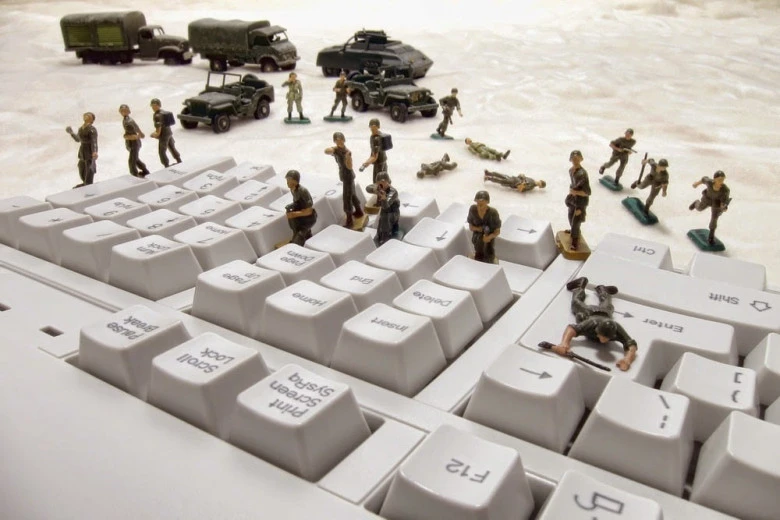
Especially recently, the term "hybrid war" has been used a lot. Even those who have no idea about it immediately label any unfavorable information as "hybrid warfare". Fashionable, in short. And what is actually a hybrid war, and what is the situation with Armenia in that regard?
The concept of hybrid warfare includes shaping and swaying public opinion, financing and organizing influence groups, promoting social tension and polarization, cyberattacks against critical infrastructure, disinformation, discrediting democratic institutions, economic disruption, and more. Armenia, which is in a difficult geopolitical situation and surrounded by two hostile neighbors, is of course very vulnerable to various forms of hybrid warfare, and the upcoming parliamentary elections become an ideal target for the interference and influence of foreign powers. For Armenia, the threat of a hybrid war is not a theoretical, but a very real, objective threat. In recent years, the country has witnessed many cases of information influence, misinformation and political interference carried out by various foreign forces.
In particular, Azerbaijan and its main ally Turkey actively use hybrid warfare methods, combining military force with information campaigns, diplomatic pressure and blackmail.
It is natural that as the parliamentary elections in Armenia approach, the opportunities for external influence will also increase. Democratic processes, as necessary and important as they are, also create opportunities for outside interference. During elections, society is polarized, political competition intensifies, news and information flows multiply, and public opinion becomes more mobile and susceptible to influence. It is in these conditions that the foreign forces, which are interested in directing Armenia's political developments in a certain direction, activate their intervention tools.
History is replete with examples of foreign powers influencing elections in other countries using financial support, information campaigns, cyber attacks, and other means. The role of information wars in modern politics is difficult to underestimate. Information has become the main tool of the government, and whoever controls information flows influences public opinion, and therefore also political processes. In the age of social networks, digital media and the Internet, information spreads at an infinite speed and reaches millions of people instantly. However, false information also spreads at the same speed. Disinformation campaigns can have different goals and forms.
And the target can be discrediting a certain political force or candidate by spreading false information about them, creating suspicious situations or diverting attention from real issues. Another approach is to create an atmosphere of general chaos and mistrust, when conflicting information spreads, the effectiveness of institutions is questioned, and citizens become disoriented and unable to distinguish truth from lies. The third method is the polarization of society, when social, ethnic, religious or political divisions are artificially exacerbated, the notions of "us versus them" are created, and society is divided into irreconcilable camps.
All these methods are often used in combination, creating a multi-layered effect. However, such informational and manipulative flows do not necessarily come from external actors, very often the authorities of the countries themselves use such tools. Or is it done in a joint effort?
For example, the authorities of our country, which constantly state that they are allegedly fighting against "hybrid influences", initiate steps to mislead the public, divert public attention, and antagonize various groups and people. In other words, it turns out that the authorities, "fighting against hybrid threats", must first of all fight against themselves or abandon the practices they have adopted for years. And it is interesting that most people talk about the hybrid threat allegedly coming from Russia, but not a single word is said about the Turkish-Azerbaijani hybrid threats.
Ankara and Baku do not hide that they are interested in the weakening of Armenia and the reduction of its ability to cope, and this implies that they are interested in having those political forces in power in our country that will show more concessionary practices and will not oppose pan-Turkish aspirations. Moreover, the Turkish-Azerbaijani tandem may seek to deepen the political crisis, internal conflicts and public discontent in Armenia by spreading misinformation, inciting intra-community or social tension and creating a general atmosphere of instability.
As for the total hybrid war carried out by the West, it is already a separate topic of conversation, which we will address in the near future. ARSEN SAHAKYAN