Euromedia24 on Play Store Euromedia24 on App Sore
BNB

$870.47

BTC

$113082

ADA

$0.868816

ETH

$4608.63

SOL

$213.76

31 °

Yerevan

20 °

Moscow

45 °

Dubai

20 °

London

26 °

Beijing

23 °

Brussels

16 °

Rome

23 °

Madrid

BNB

$870.47

BTC

$113082

ADA

$0.868816

ETH

$4608.63

SOL

$213.76

31 °

Yerevan

20 °

Moscow

45 °

Dubai

20 °

London

26 °

Beijing

23 °

Brussels

16 °

Rome

23 °

Madrid

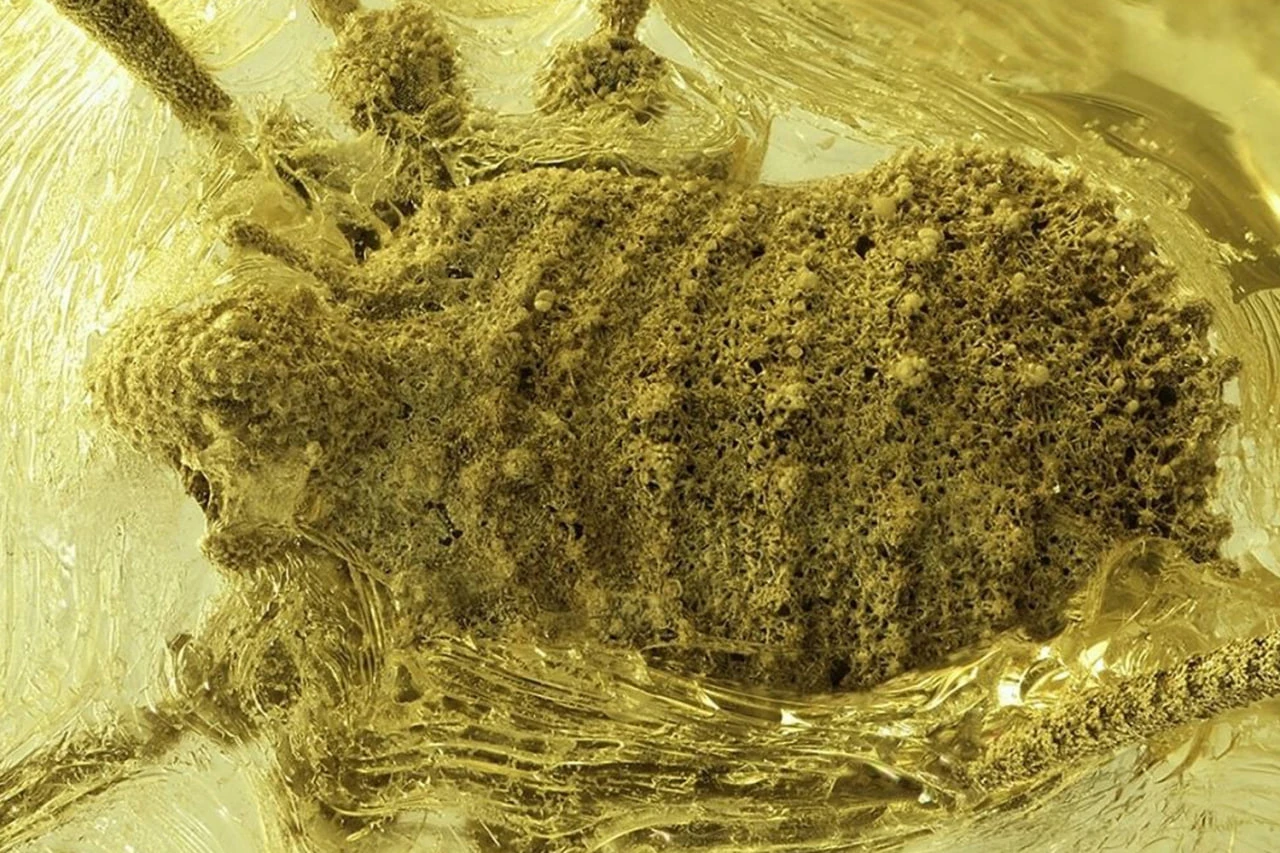
Scientists have discovered an unusual arachnid in amber, dating back 35 million years


Scientists have discovered a new type of spider web preserved in amber from about 35 million years ago. The new species, called Balticolasma wunderlichi, belongs to a rare group of harvestmen, Ortholasmatinae, members of which are not found in Europe today. The study was published in the journal Acta Palaeontologica Polonica (APP).


The unusual remains were found in two amber samples, one from the Baltic region and the other from Rovno (now Eastern Europe).


According to the researchers, this is the first known fossil of representatives of this subfamily. In the past, these spiders were thought to inhabit only East Asia and North and Central America. The discovery shows that their distribution area was significantly wider during the Eocene epoch.


Scientists examined the specimens using light microscopy and computer tomography, which allowed them to study the structure of the ancient creature in detail. It was found that the spider had complex combs on its body, web-like structures on its head, a unique eye tubercle and long legs, the second pair of which was noticeably longer than the others.


"One of the specimens was male and the other female, which allowed us to even study the structure of the genitalia, an important characteristic for classification. The finds are approximately 35 million years old. During that period, the climate of Northern Europe was significantly warmer and wetter than today, which contributed to the existence of a more diverse fauna," the scientists explained.


According to the authors, the discovery helps to fill a gap in our understanding of the evolution and distribution of harvestmen and shows that ancient European ecosystems were much richer than previously thought.


 

News

Donald Trump Has Not Yet Decided to Resume Large-Scale Military Operations Against Iran: Rubio
What Weather to Expect in the Coming Days
Financial Horoscope for November 2-8: Which Signs Will Profit
Very Soon These Zodiac Signs Will Feel the Peak of Happiness
Doctor Warns About Dangerous Mistakes for the Heart
Binance Announces Compensation of 90% of Losses from Hacker Attack
James Webb Unveils the Secret of an 11-Hour Year and Extremely Hot Planet
Soldier's body found with gunshot wound
In Albania's capital, police used water cannons and tear gas against protesters
How Much Will Gold Cost in 2027
4 Servicemen Arrested for Causing Conscript Aramais Gevorgyan to Commit Suicide
Mojtaba Khamenei has ordered the country's armed forces
Syria Considering Joining the Defense Alliance of Turkey, Saudi Arabia, and Pakistan
FSB of Russia reports receiving information from the US about terrorist act preparation in Moscow
Turkish Elif Eralp Could Become Berlin's First Female Mayor if the "Left" Reach Coalition Agreement with Social Democrats and the Greens
Gor Sahakyan will not continue fighting in the World Championship
Lufthansa Flight Attendant and Slovak Citizen Die in Incident at Hotel Swimming Pool in India
Possible prospects for cooperation between Armenia and the Brazilian aircraft manufacturing multinational company were discussed
Ambulance carrying critically ill patient involved in accident in Vanadzor today: Clarification
Close Associate of Nvidia's CEO Suspected of Spying for China: NYT

More News

...

When Journalism Becomes Propaganda: Whitewashing Azerbaijan’s Record in Artsakh․ Armen Ayvazyan

Scientists have discovered a substance in grapes that can stop one of the common diseases

The Sun, the Moon and Human Victims. the scientist revealed the terrible secret of the ancient calendar (video)

Thousands of years next to people. scientists have uncovered an unusual history of Tasmanian devils' proximity and extinction

Not just books. scientists have discovered the unexpected impact of libraries on life

Silver from Germany, Sweden and the Islamic world. The largest treasure of the Viking Age has been discovered in Finland

Cancer cases could increase by 67% by 2050

Three pools and a sauna: Luxurious baths of Roman emperor discovered in Serbia

Ancient DNA dispels the myth of the "American cheetah"

"Galileo's creation": Scientist discovers mysterious description of 17th-century telescope

Not just with the sword: millions of ancient coins show how Rome integrated conquered lands

Why do mosquitoes bite some people more and others less?

New discoveries in the "Old Khndzoresk" historical and cultural reserve

Coffee has been found to have important beneficial effects on the elderly

Which cities are more suitable for parents and which for singles? scientists have found notable differences

Impressive shots, casualties and personal connections. scientists have discovered what attracts the world's media to disasters

From nine butterflies to thousands. how one of the rarest species was saved from extinction (video)

Ancient painters added blood to the paint. a possible explanation for the durability of the Huashan paintings has been discovered

Roman-era mass grave containing remains of 129 men discovered under soccer field in Vienna

Armen Ayvazyan about his book. "Weak allies often have to face their own fate." 300 years of history is repeating itself