





The fact writes:
The last session of the Central Electoral Commission and the decision published after that have given rise to serious concerns and public outcry. At the end of the four-hour session, the commission announced that there will be no re-voting in the three controversial precincts, as the cancellation of the vote allegedly did not have a significant impact on the final result of the elections.
This claim, however, contradicts the fundamental logic of the electoral process and the recorded facts. The question arises: what scale of violation of the law or election fraud must be recorded, and what other process must take place for the commission to finally consider it a distortion of the election results and "substantial influence". When one of the four main factions of the future parliament is directly kicked out from the highest political podium because of just one arbitrary decision of the commission, it is difficult to imagine a more influential and decisive consequence. it is impossible.
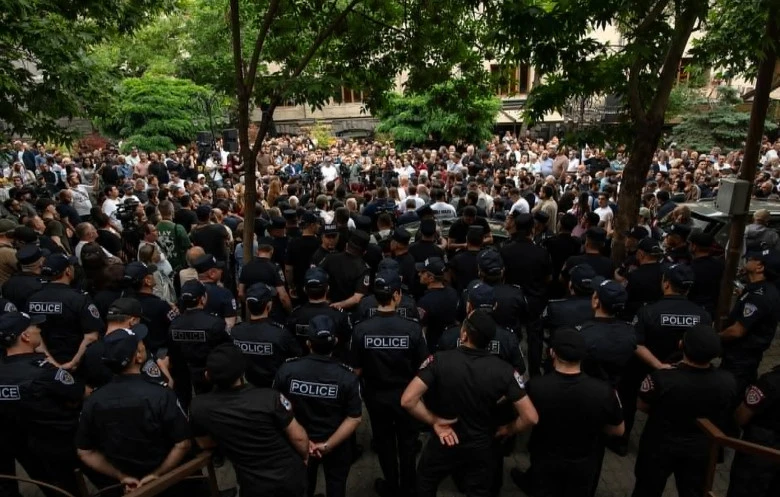
It is precisely because of the cancellation of the results of those precincts that the votes received by PAP dropped from 4.04% to 3.99%. The party fell short of the electoral threshold by a small difference of hundredths of a percent, as a result of which the votes of more than 58,000 citizens were virtually nullified, and these citizens were deprived of legal parliamentary representation. as a result, an entire parliamentary faction was expelled from the parliament. All this is happening against the background, when the administrative court had already recorded the necessity of re-voting, which indicates the legal vulnerability of the process. It is no coincidence that various political forces, figures, and lawyers consider all of this as mandate theft. Such legal blindness and undermining of trust in electoral institutions is, in fact, an anti-state process that cannot remain without consequences. Depriving the opposition part of the public of the opportunity to be heard on the parliamentary platform in a politically legal way, the government closes the institutional doors of political dialogue. When a citizen loses faith in the power of his vote, the fight objectively moves outside the legal field and can lead to a large-scale street fight. By trying to artificially form a parliament corresponding to its own political expediency, the ruling system is placing a slow-acting bomb under its own foundations, because the accumulated public dissatisfaction will eventually become the reason for the disruption of stability and the mobilization of the opposition masses on the street. At this stage, the struggle is transferred to the Constitutional Court, and the only way to prevent the created dictatorial tendencies is through all the public opposition.