





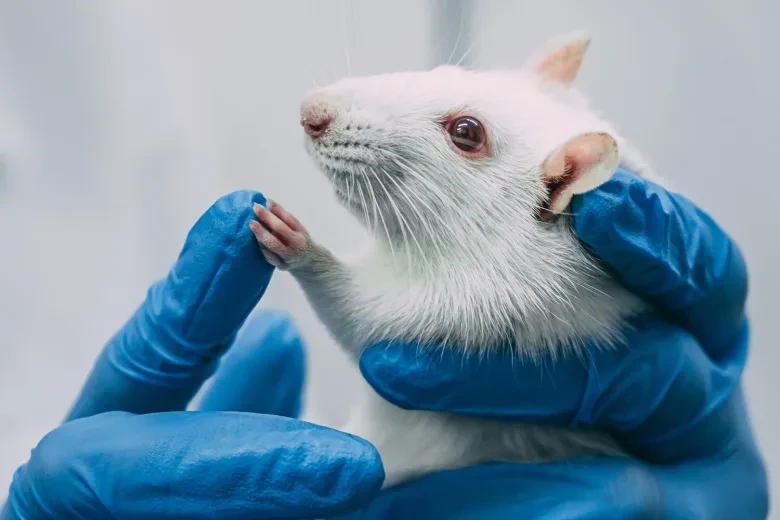
Scientists at the Korea Advanced Institute of Science and Technology (KAIST) have developed an artificial intelligence system that can analyze the behavior of mice in the same way that language models analyze human speech. The results of the study were published in the International Journal of Computer Vision (IJCV).
The new model, called BehaVERT, "reads" animals' movements instead of words, treating the sequence of their positions as a kind of language. To do this, the algorithm tracks the position of the mouse's nose, ears, spine, paws and tail, and then analyzes how these movements form behavioral patterns.
According to the authors, while the individual poses make little sense, the sequence of movements allows researchers to understand what the animal is doing. This allows the system to independently recognize different behaviors without the need for manual interpretation of video recordings, which traditionally takes a significant amount of time.
BehaVERT's performance was tested on five different mouse databases, including social interactions, group behavior, 3D movements, and autism models. In all tests, the algorithm outperformed existing analysis methods.
The experiment conducted with mice lacking the Shank3B gene, which is associated with autism spectrum disorders, was particularly revealing. Without prompting, the artificial intelligence discovered that a key characteristic of these animals was the lack of close social contact, a behavior previously described by biologists.
The developers also made the system interpretable. researchers can see which specific movements affected the algorithm's conclusions. Furthermore, the model successfully transferred its results from rats to mice, demonstrating the existence of common behavioral patterns across species.
The authors believe that BehaVERT will significantly accelerate research in mental disorders, behavioral genetics, and drug development. According to them, the technology does not literally "read" the minds of animals, but allows it to automatically detect hidden behavioral patterns that are too difficult for humans to detect.