




"Zhoghovurd" daily writes: "The formation of the 9th convocation of the National Assembly of Armenia is not only the start of another parliamentary cycle. Although the changes that took place from the outside may seem technical: a new president, a new management team, redistribution of commissions, in reality the process is much deeper.
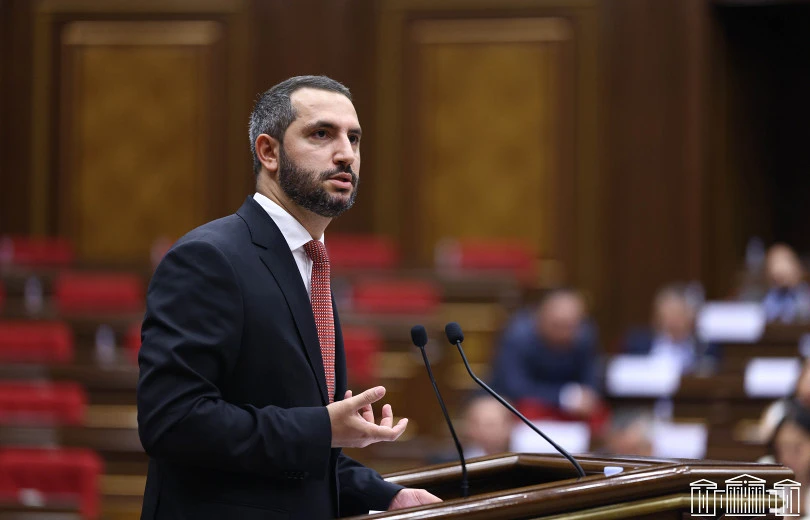
With the election of Ruben Rubinyan, Nikol Pashinyan essentially begins the construction of a new architecture of power, where the parliament should not only be a legislative body, but also a new stronghold of political control. Rubinyan's election as a political message In recent years, Ruben Rubinyan has been associated primarily with foreign policy, especially the process of normalization of Armenian-Turkish relations.
However, his transfer to the post of President of the National Assembly means that the Prime Minister entrusts him with not only a diplomatic but also an important domestic political role.
The position of the Speaker of the National Assembly in the political system of Armenia has long ceased to be exclusively ceremonial. It has become one of the balancing centers within the government, and sometimes also managing political processes in crisis situations. With the appointment of Rubinyan, Pashinyan hands over the leadership of the parliament to the politician who is considered one of his most loyal teammates.
The new role of the Parliament The experience of the 8th convocation showed that in the presence of the parliamentary majority, the National Assembly often acted according to the logic of the mechanism that quickly approves the government's initiatives. The main question of the new convocation is whether that model will be preserved or whether the government will try to give the parliament a more active political role. So far, all the signals point to the limited version of the second. the parliament can become not an independent counterbalance, but a more effective platform for political coordination within the government. Rubinyan's political experience, negotiation skills and team discipline are the most suitable for this purpose. The latest personnel developments show that a reorganization process is underway within the government.
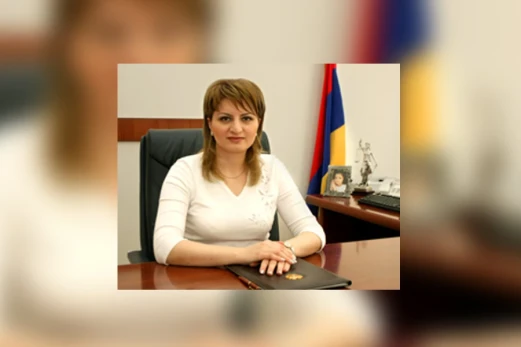
After the departure of Araik Harutyunyan, the appointment of Lilit Makunts as the head of the Prime Minister's Office has raised many questions in the state system. In the official circles, there is already talk about possible large-scale personnel changes, which may concern not only the staff, but also the structures, committees and departments under the prime minister's authority. A generational change within the CP?
Rubinyan is one of the most visible representatives of that generation. His election can be seen as a signal that Pashinyan is trying to ensure the long-term stability of the government not only through personal prestige, but also through new political figures. However, it is still too early to call this a complete generational change. Key political and organizational levers continue to be under the control of a narrow circle directly subordinate to the Prime Minister. Therefore, Rubinyan's upcoming activity will be an important test to understand how independently he can act in his new position.
The parliament led by Rubinyan is also a new challenge for the opposition. If in the past the opposition factions often emphasized sharp political clashes, then in the new situation they will have to act in a more organized parliamentary environment, where the procedural management of the sessions, the work of the committees and the formation of agendas can become additional tools of the power's influence. This is where the role of the NA Speaker becomes crucial. he can not only lead the sessions, but also influence the pace, format and public perception of political discussions. All these processes together show that Nikol Pashinyan is trying to move to the next stage of power management. In the post-war years, his system was based mostly on crisis-focused management.
Now, when a new parliament is being formed, the government is trying to create a more institutional, but at the same time strictly controllable management model. In this model, Rubinyan's parliament should not become an independent political pole, but an important component of the new architecture of Pashinyan's government, ensuring political stability, team cohesion and controllable management of public processes."
Details in today's issue of "Zhoghovurd" daily.