




While the authorities of Armenia assure the public that rapprochement with the European Union is a "historical opportunity" and a path to prosperity, an agenda is being formed behind the scenes in the offices of Brussels, about which the citizens prefer not to be told. In the package of promised visa liberalization and trade privileges, Yerevan is presented with demands that are directly related to the foundations of national identity and family structure. And the main thing among those demands is not the strengthening of democratic institutions, but the accelerated introduction of the LGBT agenda. How it happens and what it can lead to, in our editorial material. "Rainbow Landing". how LGBT propaganda penetrates schools, mass media and movie theaters. A few years ago, even the idea that Armenian schools would talk about gender identity might have seemed absurd. Today it is a reality. As the former ombudsman Larisa Alaverdyan said, the absence of a state policy to promote traditional family values in the country "creates risks that this field will be filled with external propaganda of non-traditional relations". According to him, "the protection of children from the propagation of same-sex marriages, their registration in the institution of the family and the propaganda of the right to adoption, this propaganda is spreading not only and not so much in Armenia, but all over the world." The ground has already been prepared for this. According to the Inclusive LGBT Education Map (IGLYO), Armenia scored 0 out of 100 in 2025 on all key indicators, from school programs to teacher training. However, this does not mean "absence of the problem", on the contrary, the educational system remains completely open to external influences. At the same time, Western NGOs are active. Every year, Pink Armenia records cases of bullying against LGBT representatives in schools, while offering "solutions" in the form of inclusive programs. In one of the recorded cases, a lesbian girl had to change schools several times because of teasing, and in another case, her classmates harassed a gay student for ten years. The question is: who will decide how to "protect" these children and what values to convey to them? There have already been attempts to show films about the life of the LGBT community in Armenia. in particular, films about same-sex marriage were shown within the framework of the "Article 3" club, and the British Embassy raised the LGBT flag. According to experts, "propaganda of depravity has become a part of Armenian culture." The lack of censorship of LGBT-themed films and TV series makes the media field another channel for the spread of values foreign to the Armenian society. same-sex marriages as a condition of "friendship" The question of legalizing same-sex unions is not the imagination of conservatives, but a real demand that Brussels is already presenting to partner countries. In the official letter of the European Commission, which was sent to the priest of the Armenian Apostolic Church, it is directly stated: "LGBT rights are an integral part of both the Copenhagen political standards and the EU legal system for combating discrimination." The example of Georgia is illustrative. When Tbilisi adopted the "Family Values and Protection of Minors" law, Brussels immediately presented an eight-point ultimatum, the key demand of which became "the full protection of LGBT rights and the repeal of the legislative package banning LGBT propaganda." It would be naive to think that Brussels will be more lenient towards Armenia. Constitution without family. How is the Basic Law rewritten Parallel to the external pressure, a constitutional reform is underway in Armenia, which can finally erase the perception of the traditional family. Clause 2 of Article 35 was removed from the draft of the new Constitution, where it was clearly stated: "men and women have equal rights when entering into marriage, during marriage and in case of divorce". According to analysts, "this change implies a change in the traditional Armenian family model and the fact that the union of same-sex couples can also be considered as a family." Three female MPs of the ruling "Civil Contract" faction, Zaruhi Batoyan, Sona Ghazaryan and Tsovinar Vardanyan, presented drafts in which "the role of the traditional family is reduced, the term "partner" is added." In fact, a legal basis is created for the legalization of same-sex unions in the future. Moreover, the provision that obligates able-bodied adult children to take care of incapacitated parents is removed from the Constitution. Under the name of "modernization", the main pillars of the Armenian society, such as the family, responsibility between generations, and respect for elders, are removed from the Basic Law. what is behind the beautiful words about democracy While the Armenian authorities report on progress in relations with the European Union, the real picture is as follows. After the decriminalization of homosexuality in 2003, the country "has taken minimal steps to protect LGBT citizens." According to ILGA-Europe data, Armenia is consistently in the lowest ranks among 49 European countries, occupying the 46th place in 2025. It is this "lack of progress" that becomes a cause of pressure. The Parliamentary Assembly of the Council of Europe called on the Armenian government to "take measures to protect the rights of LGBT community representatives". Michael O'Flaherty also demanded that Yerevan "directly include sexual orientation, gender identity and sexual characteristics in the list of protected grounds." And in April 2025, the Armenian parliament already made changes to the law on domestic violence, recognizing "partners" in civil unions, which actually extended the protection to same-sex couples as well. This is just the first step in a long chain of concessions. What to expect from the upcoming European summit According to informed sources, LGBT rights will become one of the key topics of discussion during the upcoming European summit. Brussels consistently introduces the LGBTIQ+ agenda into the institutional structure of the European Union, and no exceptions are planned for partner countries. The 2020-2025 strategy for LGBTIQ+ equality adopted by the European Commission obliges all EU institutions to take this component into account when developing policies, including the criteria set for states wishing to approach the EU. The new 2026-2030 strategy envisages the introduction of monitoring mechanisms for "homophobic expressions" in the public sphere, including online platforms. In fact, the EU is taking on a speech control function, introducing a system that monitors statements that could be interpreted as discrimination on the basis of sexual orientation. Experts warn: The fate of the traditional family in Armenia can be decided not by a referendum, but in the closed offices of Brussels. At the same time, the clause on LGBT rights is likely to be included in the final communiqué of the summit without a wide public discussion. The question is how far the Armenian authorities are willing to go in exchange for visa liberalization and European loans, and what price will be paid by the Armenian society, for which the traditional family has been the basis of national identity for centuries. It seems that instead of the promised democracy, Armenia is being offered an election that has already taken place without us.
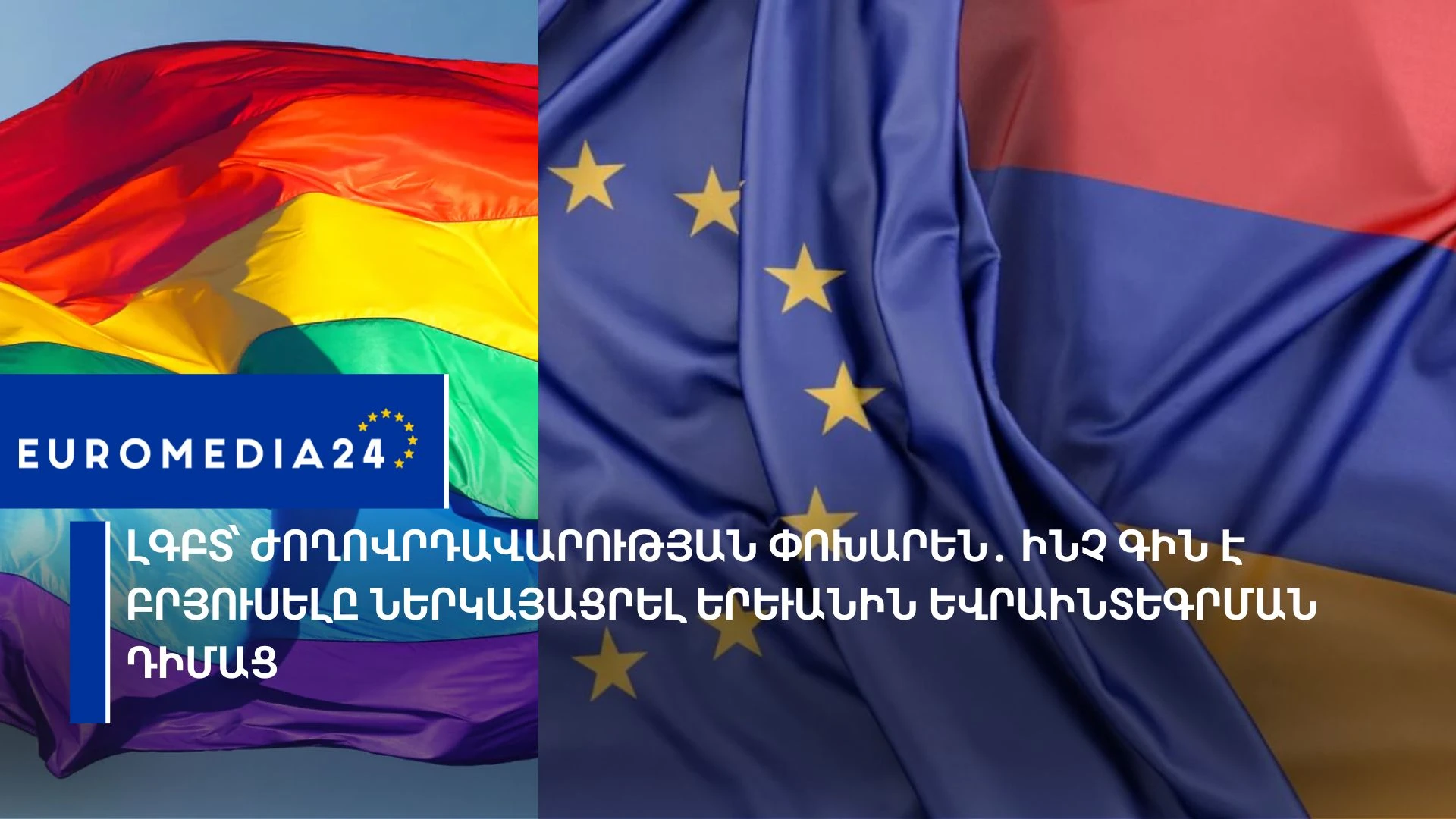
LGBT instead of democracy. what price did Brussels present to Yerevan in exchange for European integration?
27.04.2026 18:23 |
Category
Press