




Political scientist Suren Surenyants writes: "Political lying as state policy
The thesis that "Artsakh was surrendered a long time ago" has turned into one of the key components of the political discourse systematically circulated by the government in recent years. It serves to justify the decisions made in hindsight and to dissolve the political responsibility for the defeat. Defeat is presented as a predetermined and inevitable reality, as a result of which the role of the political subject and the question of the quality of decisions are pushed out of the public discourse.
The consistent use of this narrative creates a dangerous perception in the public consciousness. the efficiency of state administration is presented as secondary, because, allegedly, no other way out originally existed. Such logic takes root especially quickly in those social environments where political education is absent and critical thinking is not developed. As a result, defeat is considered normal, and the question of responsibility is blurred.
As a result, public discourse focuses on "inevitability" rather than error analysis, which can hinder the development of political consciousness.
However, the situation fundamentally moves to a different dimension when the same thesis is voiced by the deputy of the ruling faction, Gagik Melkonyan, who previously held the position of the deputy minister of defense during the period, which in the current government discourse is characterized as the period "where Artsakh was surrendered". In this case, we are dealing with a clear rejection of political responsibility. If Artsakh was "surrendered a long time ago", then the state activity of the given official was either formal and meaningless, or was consciously included in the losing system.
Such an approach indicates the general value system and institutional crisis of the ruling elite. The political elite, which retroactively refuses responsibility for the processes that took place during its tenure, is actually deprived of its legitimacy and turns into a self-justification mechanism.
Political lies are turning into a tool of management.
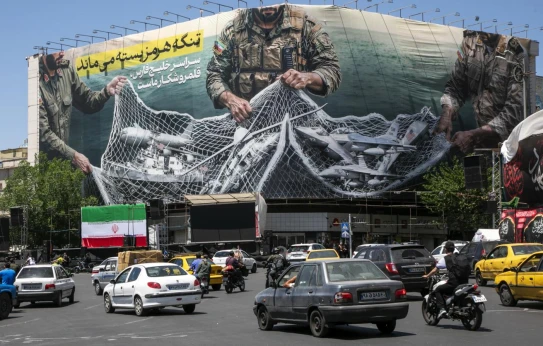
In the same logic, the public behavior of the government led by Nikol Pashinyan is also characteristic, when the regional security environment, including the dangerous processes developing around Iran, requires maximum political concentration and responsible state behavior. Under these circumstances, the frivolous and inappropriate actions shown in the public arena deepen the dissonance between the state's thinking and the real threats to security.
As a result, a systemic problem is formed. the government normalizes defeat, turns responsibility into verbal manipulation, and statesmanship into a narrative serving short-term political interests. In such conditions, the main security threat of Armenia is not limited only to external factors. It is also caused by the institutionalization of political lies formed within the government, which destroys the foundations of state responsibility and self-awareness."