





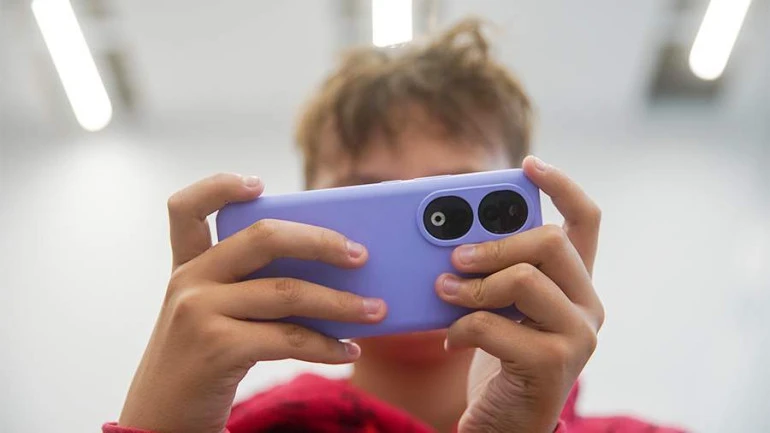
The regular meeting of the Public Council attached to the Minister of CGMS took place, chaired by Minister Zhanna Andreasyan. One item was included in the agenda: presentation of an initiative to limit the access of children under the age of 16 to social networks.
Welcoming the attendees, Minister Zhanna Andreasyan highlighted the importance of discussing the issue with the members of the public council to hear their views and suggestions regarding the initiative.
"In fact, many worrying phenomena, such as bullying and child safety, are very often transferred and transformed from the physical environment to phenomena that take place in the virtual space, and the protection of children on social platforms becomes a critical issue.
In general, the world today does not have a unified approach on how to deal with this problem. there are countries that follow the path of prohibition, and some countries pursue policies aimed at self-regulation and increasing literacy. It is not that one version is completely right and the other is wrong. in the case of each approach, we can mention both advantages and gaps. Just by understanding our local context, we should be able to imagine which approach would be more accurate in our case. Of course, there are many issues, starting with a separate approach to children of different age groups, and there is a need to clearly visualize this distinction.
We must be able to find such reasonable and competent approaches to prepare for possible challenges on the one hand, and on the other hand to properly protect children from all risks, which, of course, is a difficult task. I hope that today's discussion will support us in this important task to clarify our ideas, and you have the opportunity to make your contribution in adopting more literate and thoughtful approaches," the minister noted and emphasized that since the problem is not only in the field of the Ministry of CGMS, therefore, an interdepartmental working group was created to study the issue, in which representatives of the Ministries of High-Tech Industry, Labor and Social Affairs, Internal Affairs, Territorial Development and Infrastructure are also involved.
The issue on the agenda was reported by Araxia Svajyan, deputy minister of KGSMS, noting that the topic is very sensitive, and it is difficult to find definite solutions and regulations. He informed that the experience of different countries was studied in order to understand what kind of restrictions are in place.
"The strictest restriction seems to be in Australia, where children under the age of 16 are generally prohibited from accessing social networks. European countries have different age limits and more restrictions, such as parental controls, blocking of certain websites, than generally prohibited. On the one hand, this naturally prevents risks, but on the other hand, taking into account the digital literacy of children, bypassing some systems is not always successful.
Therefore, today in all developed countries this problem is clearly set: drastic restrictions definitely cannot be so effective.
The deputy minister cited some indicators from the UNICEF report "Harm Prevention in Armenia", which, according to Araxia Svajyan, are quite worrying.
For example, one in 20 children aged 12-17 who use the Internet have experienced online sexual exploitation or abuse within a year. 71% of the cases took place entirely online, and in 57% of the cases, the children indicated that it was carried out by people they knew. 53% of abused children stated that they did not speak about the incident and remained alone in this situation.
"Of course, there are children who are able to find solutions on their own, but we often have situations when the child has a bad mood, isolates himself, experiences a decline in motivation towards learning, and no one understands the reason for this. These phenomena can often be the result of similar situations. There are also certain international indicators, for example, within a year, around 1.2 million children fall victim to fake sexual content created by deepfake technologies. In other words, the more the technologies develop, and the tools of artificial intelligence have been added to them at the moment, the more the problem grows.
According to Araxia Avajyan, many works have been done in this direction. for example, this school year was declared by the Ministry of Education and Culture as the Year of Safe and Secure Education, and every month schools have organized activities in one direction, including cyber security or digital literacy; "I hope that the work done throughout the year had a certain impact.
We also emphasize Digital Literacy and Media Literacy, and because of this, children from Year 2 already take Digital Literacy and Computer Science. Another important direction is the "Healthy Lifestyle" group, which children from the 5th grade pass as a compulsory group. Currently, we are making changes to the state standard of general education, making it a mandatory subject, hoping that it will have a greater impact. One of the important components of a healthy lifestyle are a number of courses on protection of one's body, personal space, recognition of violence, reaction mechanisms in case of violence and other directions, which are based on an interactive methodology.
According to the deputy minister, a procedure related to reaction mechanisms has been launched: child protection teams have been formed in all schools, which include people holding specific positions, for example, a psychologist, deputy director, etc. A certain procedure has also been provided to schools to understand if a child is being bullied, to whom to refer in that case, how to involve the TMCs and the psychological service, as well as other interested bodies, etc. "These systems are already operating in schools, and I think we will see their impact in the near future. The school must realize that its direct responsibility is not only academic education. it should also be a child's protection link and be especially sensitive to domestic violence, situations that pose a threat to the child's life, health, and vitality, and be able to react quickly."
More details: KGSMS Ministryon the website.