

Euromedia24 on Play Store Euromedia24 on App Sore
BNB

$870.47

BTC

$113082

ADA

$0.868816

ETH

$4608.63

SOL

$213.76

31 °

Yerevan

20 °

Moscow

45 °

Dubai

20 °

London

26 °

Beijing

23 °

Brussels

16 °

Rome

23 °

Madrid

BNB

$870.47

BTC

$113082

ADA

$0.868816

ETH

$4608.63

SOL

$213.76

31 °

Yerevan

20 °

Moscow

45 °

Dubai

20 °

London

26 °

Beijing

23 °

Brussels

16 °

Rome

23 °

Madrid

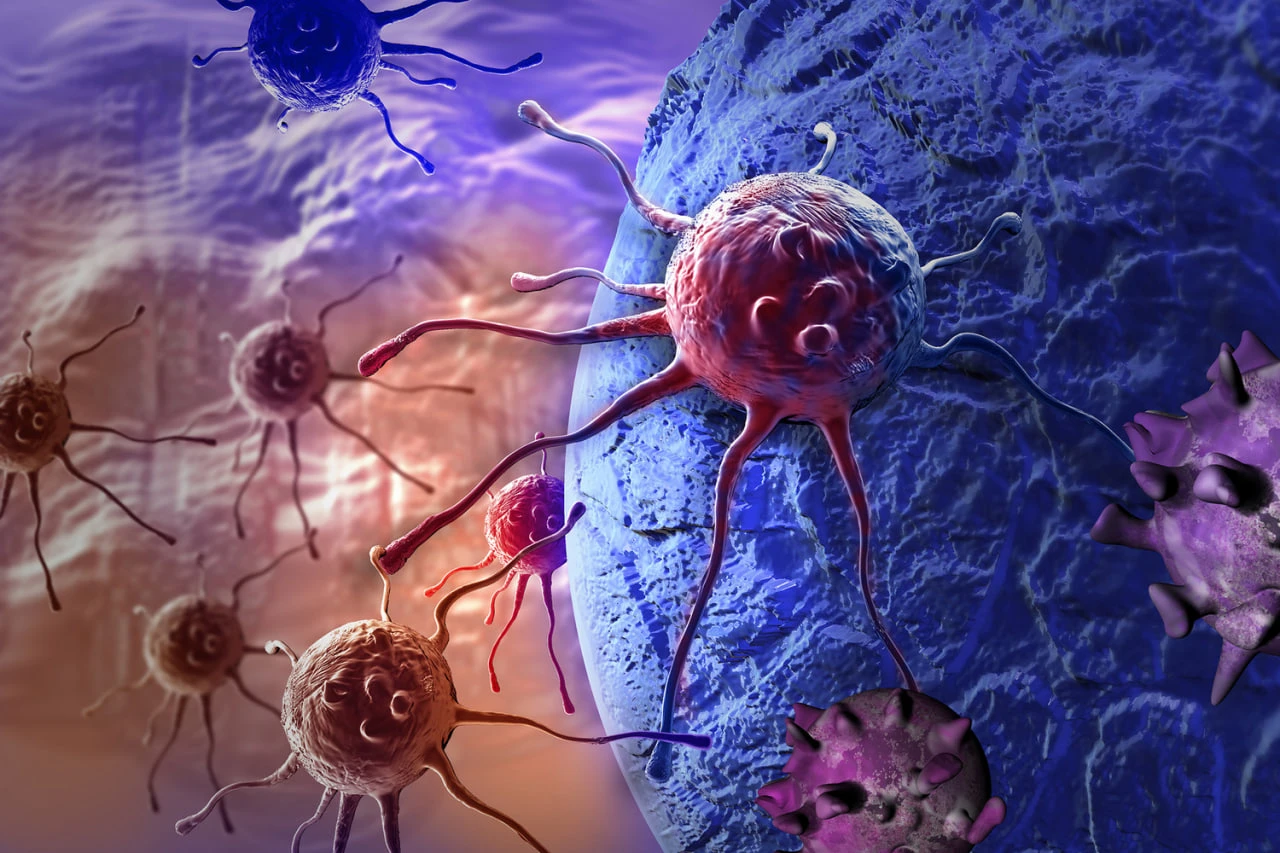
Artificial intelligence has learned to discover markers of invisible disease within the cells


Scientists at McGill University (Canada) have developed an artificial intelligence-based system that can detect incomprehensible molecular markers in the disease in individual cells. The results were published in Nature Communications (Natcom).

Scientists have explained that many diseases leave their "fingerprint" in the form of delicate changes in RNA. These signals can show the existence of the disease, its stage or the body's response to treatment. However, traditional methods often simplify data. They analyze RNA at the whole gene, skipping important information about how gene is active in each individual cell.

The processing of McGill's team allows you to analyze more details on the expression of RNA at the exhibition level, small parts of RNA, which make up the final gene structure. This approach gives a more accurate picture of molecular changes in disease.

"The genes are not built on both solid blocks, but like pieces, like Lego bricks." "Our system, called Dolphin, analyzes how these components are connected and identifying the disease signals, which were previously imperceptible," explains the first author of the study Kylu Song.

During one attempt, Dolphin analyzed the data of individual cells of pancreatic cancer patients and detect more than 800 new diseases that were not found in traditional methods. The system has also been able to distinguish between patients with aggressive and less dangerous forms of tumors.

According to the authors, Dolphin will eventually create "virtual cells". These digital models will replace real cell behavior and their reaction to medicines. This will allow us to predict the effectiveness of treatment before the clinical trials begin.

Translation of: Euromedia24.com

News

1 year ban for insulting a referee
The body of a 71-year-old woman was found on the train tracks in Gyumri
Ambassador Quinn will return to Washington just one month before the end of his tenure. Suren Sargsyan
In Russia, a teenager attacked students with a knife, killing a 10-year-old child. new details (video)
The hydrological regime of Lake Sevan on December 15-21
Macron announced the final decision to build a new aircraft carrier. Putin and Pashinyan will meet (video)
Clashes in Turkey's National Assembly before the vote on the 2026 state budget draft
In Armenia, the morbidity caused by acute respiratory infections decreased compared to the previous week
The US recalled about 30 diplomats
The EU allocated a new tranche of financial aid for Ukraine
Italy's antitrust regulator fined Apple 98.6 million euros
Rutte made a new statement regarding the conflict in Ukraine
The Kremlin commented on Aliyev's absence from the informal CIS summit
Iran does not intend to sever relations with Russia at the request of Europe
Vance: Islamists could come to power in one of the EU's nuclear weapons states after 15 years
The Times. The corruption scandal could be a disaster for Zelensky
Davit Babayan and Levon Mnatsakanyan gave their final speeches at the Baku court
Ukrainian refugees in France receive less aid
Pashinyan targets high-ranking officials of the Armenian Apostolic Church. Statement by Frantisek Miklosko, Member of the National Council of Slovakia, to the President of the Council of the Slovak Republic and the Parliament
The International Atomic Energy Agency (IAEA) believes that most of the highly enriched uranium remains in Iran.