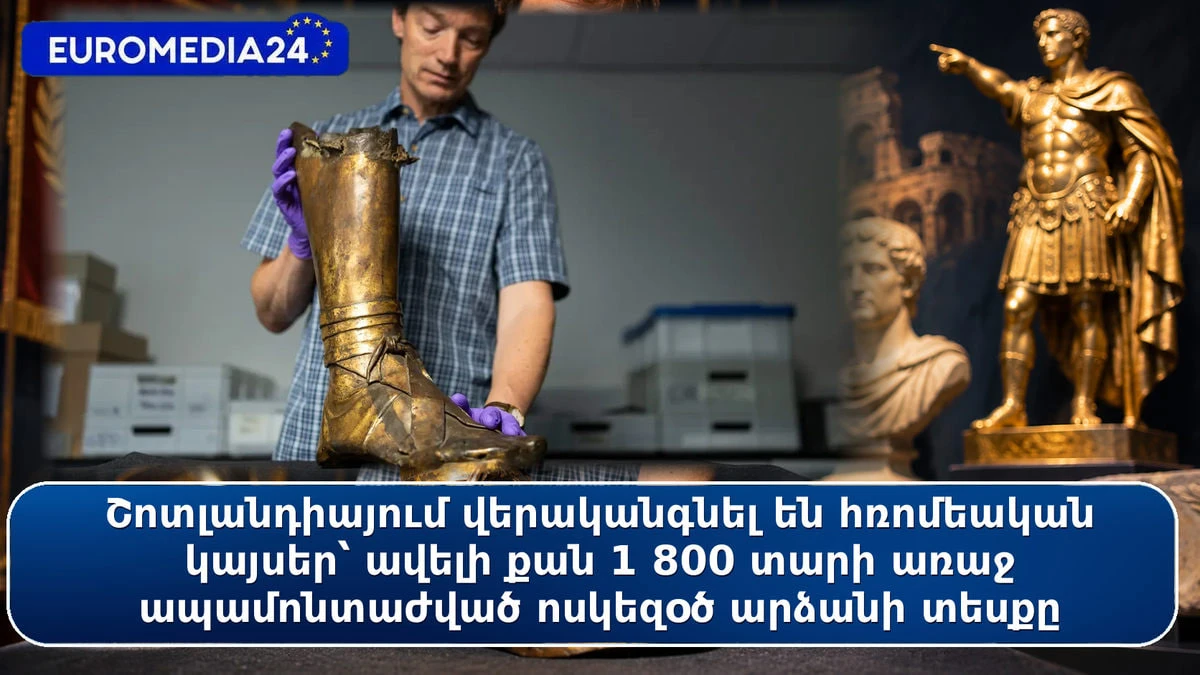
Archaeologists and art history specialists have restored the appearance of the monumental statue of the Roman Emperor Antoninus Pius, which once stood in the territory of present-day Scotland, Live Science reported.
Only the right shin—with the foot—covered in gold has been preserved from the statue. Scientists have determined what the entire statue might have looked like, but so far they do not know why it was carefully dismantled more than 1,800 years ago.
The gilded bronze fragment, known as the Milstingston Foot, was discovered in a peat bog in 1820. This was announced on November 12 by the National Museums Scotland. It is the only known sample of a Roman emperor's monumental statue found within the country's territory.
It is believed the statue was made around 140 AD, during the reign of Antoninus Pius, who ruled the Roman throne from 138 to 161 AD. His reign was a period of relative stability for the empire. In Britain, the emperor continued to expand Roman presence towards the north; around 142 AD, the Romans began constructing a defensive structure in Scotland known as the Antonine Wall.
The preserved part of the statue testifies to its impressive size and high quality craftsmanship. The bronze surface was covered with gold, which would have made the statue particularly impressive in appearance.
However, the fate of the statue remains a mystery. It was not merely damaged but dismantled, and the circumstances of this process have not yet been clarified. It is unknown whether this was related to political changes, deliberate destruction of the emperor's image, or other reasons.
The restoration allows an understanding of the scale of Roman monumental art in northern Britain and gives researchers the opportunity to better grasp how Rome displayed its power in the distant territories of the empire. Nevertheless, scientists still need to explain why only a portion of the gilded foot remains from the once magnificent gilded statue.