Archaeologists have discovered a rare 5th-century cemetery in northeastern France where two commanders of Germanic tribes and two war horses were buried. The find could shed new light on the life of European communities during the collapse of the Western Roman Empire, officials from France's National Institute for Preventive Archaeological Research (Inrap) reported.
The cemetery was found near the city of Colmar, just a few kilometers from the Rhine River. Today, the river serves as the border between France and Germany. Previously, a Gallo-Roman settlement existed in this area from the 1st to 3rd centuries AD. Archaeologists uncovered remnants of houses, hearths, wells, and workshops.
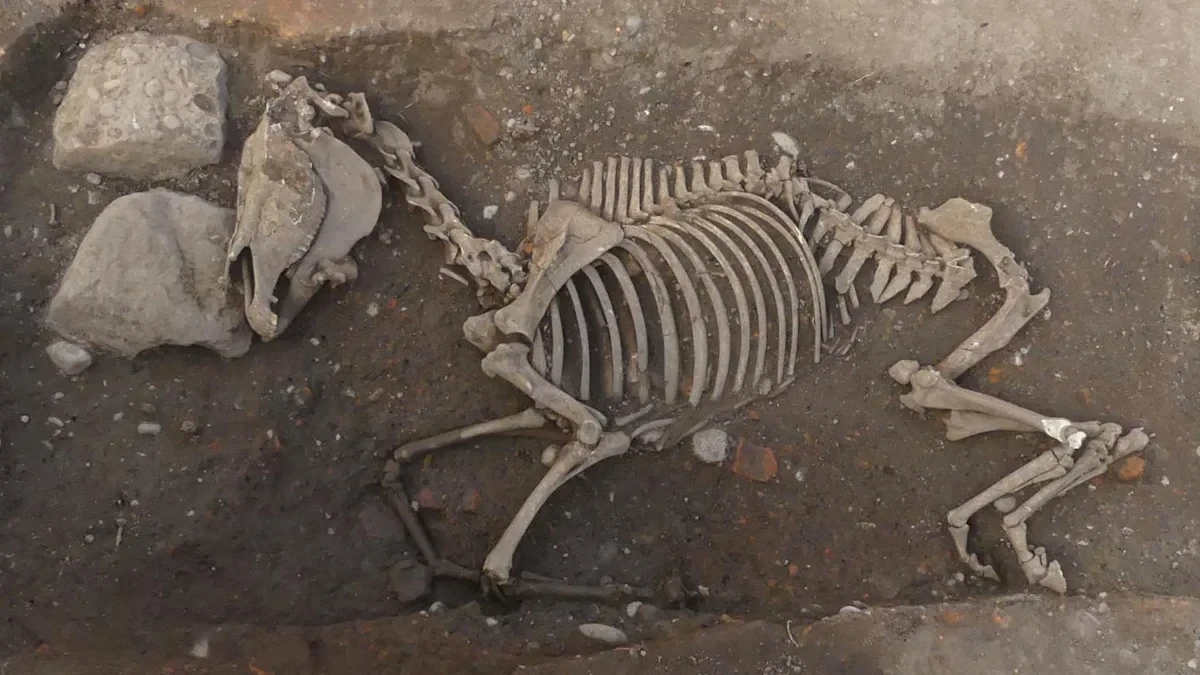
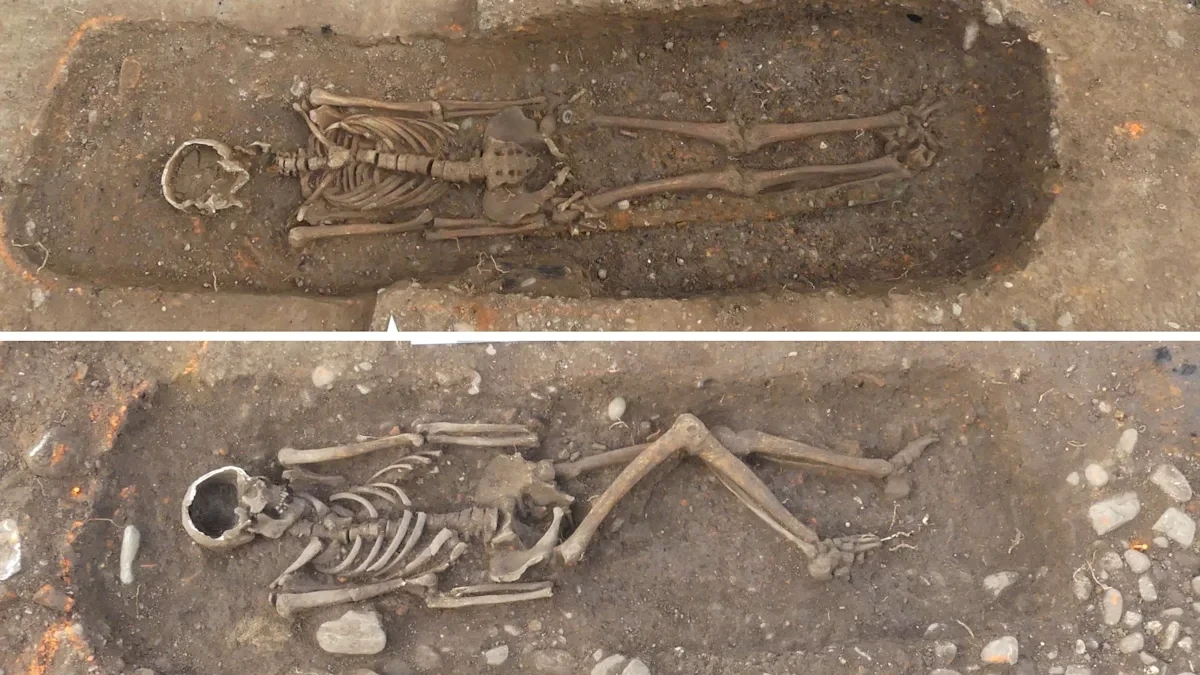
The cemetery was used approximately between 450 and 500 AD. Within its area, the remains of 11 adults, three children, and two horses were discovered.
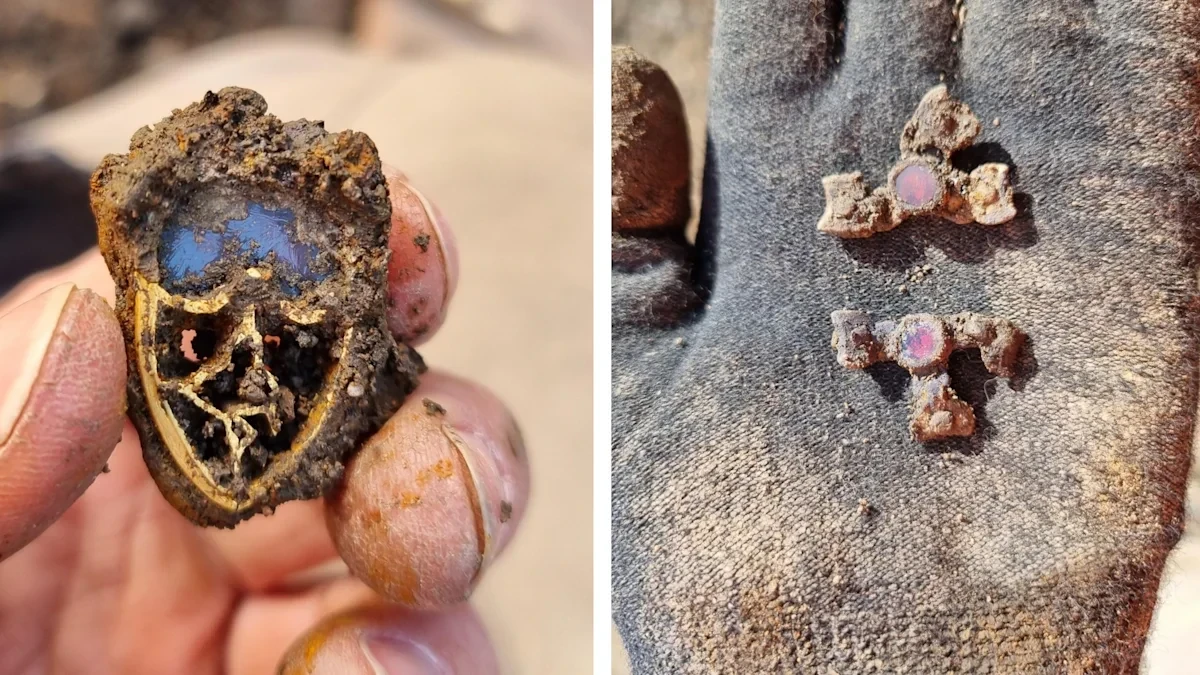
The researchers' special attention was drawn to the two men's graves, which contained rich burial goods. Among the finds were a partially preserved wooden scabbard sword, a shield, a spear intended for throwing, and a scramasax—a Germanic short sword. It was adorned with a gold detail inlaid with garnet stones. Two horses were buried alongside the men, together with elements of harness.
According to archaeologists, the weapons are characteristic of burials of commanders or mercenaries of Germanic tribes. Possible traces of battle wounds were detected on the bones of the deceased. Two individuals had puncture wounds without signs of healing, which may indicate a sudden violent death. The right knee bones of another man were completely fused, preventing him from bending his leg. This condition, called ankylosis, can result from improperly healed injuries.
Two women's graves contained bird-shaped silver fibulae—clothing fasteners—glass bead necklaces, and bone combs. These items may indicate the high social status of the buried individuals.
The researchers intend to continue studying the remains to determine whether the discovered injuries were sustained during armed conflicts.
Cemeteries and settlements of Germanic peoples from the 5th century are preserved in small numbers. Therefore, this find could help scientists better understand the political upheavals following the collapse of the Western Roman Empire and their impact on populations living in frontier areas.
In the 5th century, Rome was repeatedly subjected to attacks and conquests by Germanic tribes including the Goths and Vandals.