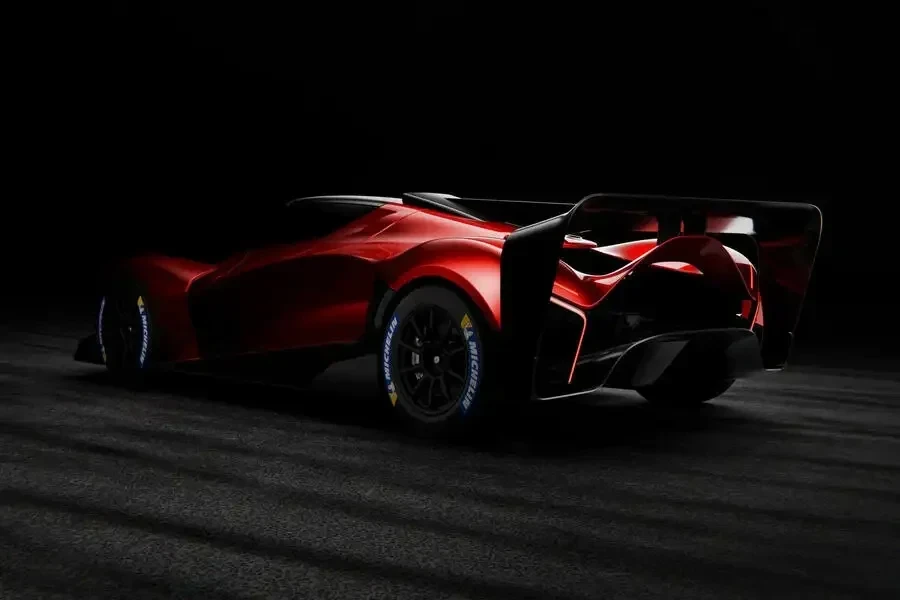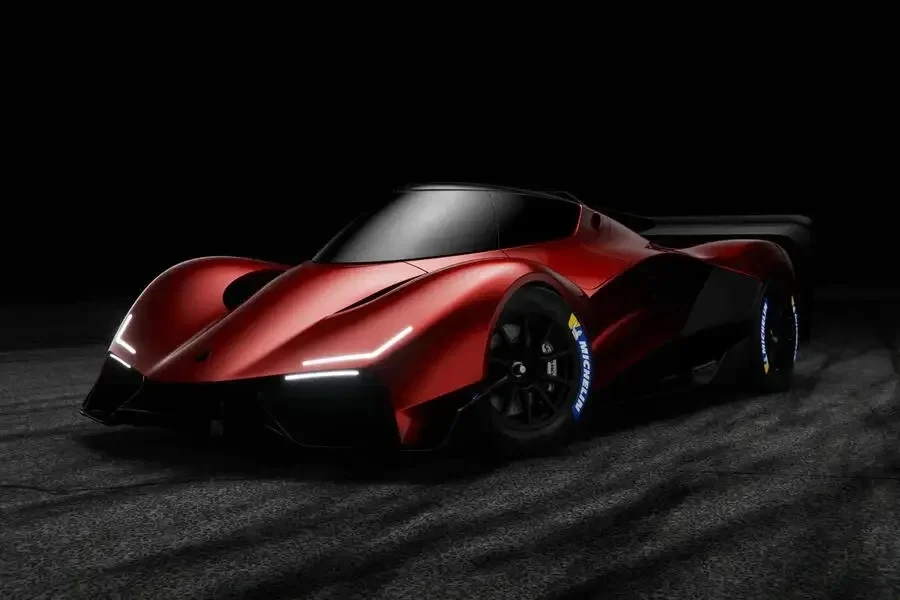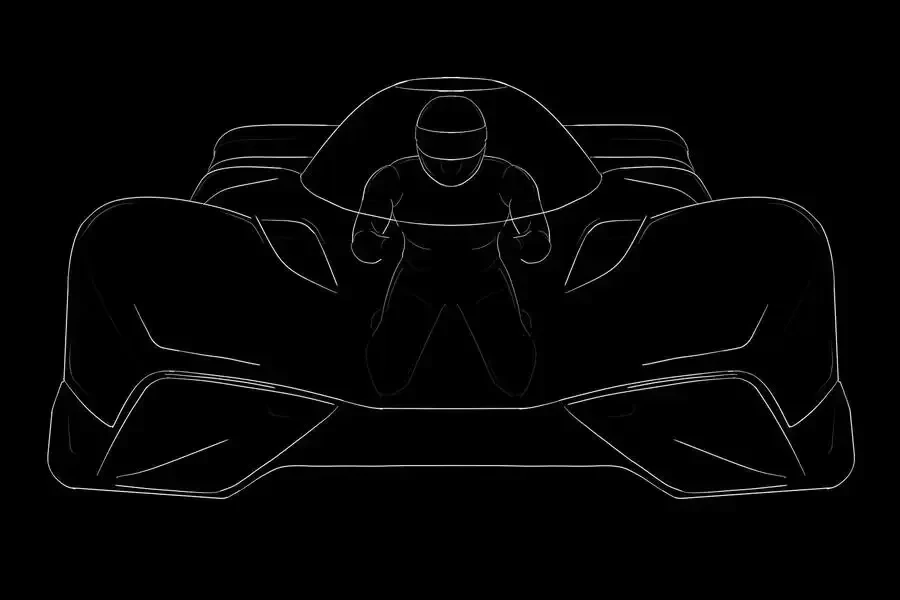
Dutch startup Sanrivatti has presented a prototype of the One hypercar, in which the driver sits almost lying down—head first, similar to a motorcycle racer, Autocar reported.
The company plans to release the track-focused model in 2030 and claims that the unusual seating position will improve visibility and allow the driver to feel the car's behavior more sharply.
Sanrivatti founder Santiago Sanchez called the Apex concept a complete opposite of traditional car construction. According to him, the driver does not simply sit in the car but adopts an active, aggressive position that helps to fully focus on driving.
"You feel like one entity with the car. You no longer sit in it as if in an armchair watching a movie. Now you take an active position, adopt an aggressive posture, and you are forced to be here and now," Sanchez explained in an Autocar interview.
He believes the head-first position changes the perception of turns: the driver feels that it is not the turn approaching them, but they who are moving toward it. This is intended to encourage a more active approach to cornering.
At the same time, the design retains a conventional steering wheel and pedals. These will connect mechanically to the car's corresponding mechanisms, rather than through electronic controls. The driver’s position will not be completely horizontal; the developers seek a balance between the extreme posture of a superbike racer and the more relaxed position typical of a normal car's steering wheel.
One of the technologies under development is the GNS system for neutralizing overload forces. Sanchez described it as a mechanism that allows the driver to lean, but did not provide details as the system is still in development.
The Sanrivatti One prototype will be equipped with a 789-horsepower Judd V10 naturally aspirated engine. According to the founder, the choice was motivated by its thrilling sound, reminiscent of the noise of Formula 1 racing engines. The company aims for approximately 1,100 kilograms dry weight and a top speed of 205 miles per hour (about 330 km/h). Engineers have used Belgium’s Spa-Francorchamps circuit as a benchmark during development.
The unusual seating complicates chassis tuning: the driver’s mass is positioned higher and concentrated in a smaller area than in a typical supercar. This affects steering and suspension geometry, and potential weight shifts within the GNS system add further challenges.
Sanchez insists that safety in crashes will not be compromised for the sake of the unconventional design. The company also plans to organize an owner training program to gradually acclimate them to the new driving method, especially at high speeds.
Paul Arksden, who previously led engineering for the McLaren P1, worked on McLaren Special Operations vehicles, and served as VP of Engineering and Product Development at Singer, is involved in the project. Currently, all company efforts focus on the Sanrivatti One, although the Apex concept could be applied in future to cars intended for general road use.