





The "Fact" daily writes:
The current domestic political situation can be described as a prison stagnation. At least, that is the picture on the surface. What is this about? Look: almost all the leaders of the main opposition forces are currently under certain preventive measures.
And we are talking not only about the leaders of the forces represented in parliament, but also about the leaders and representatives of the extra-parliamentary forces, including the leaders and representatives of the forces that did not pass the parliament due to noisy and shameful manipulations. From the outside or the first impression may be that the government, represented by Pashinyan and the repressive machine serving his political interests, has solved its main problem: to isolate the national, opposition forces, to neutralize the centers of resistance. As we have noted in previous references (and what is obvious), Pashinyan needs this in order to be able to fulfill the obligations he has undertaken to external forces, with minimal or zero resistance. Yes, a situation has been created where the nerves and resources of the opposition forces are focused on prison realities, trials and courts. It is such a picture that the interviews and briefings of the representatives of the opposition forces who remain at large are either at the gates of Pashinyan's prisons and torture chambers, or at the courthouses. Yes, there are statements, interviews, and public speeches. In other words, there is activity.
But this activity often “spins” around the authoritarian spider web formed by the Pashinyan government and the realities conditioned by it. On the other hand, let us repeat, this is only the surface picture, which, let us believe, reflects only a small part of the actual realities, possible developments. In short, this is the visible part of the iceberg. But for the overall picture, it is very important to know what is happening in the invisible part. It is obvious that as a result of the “towards Europe” political course adopted by the same Pashinyan government, or, as many experts note, adventurism, new trials await Armenia. And in this matter, there are circumstances that are already beyond the control of the Armenian authorities.
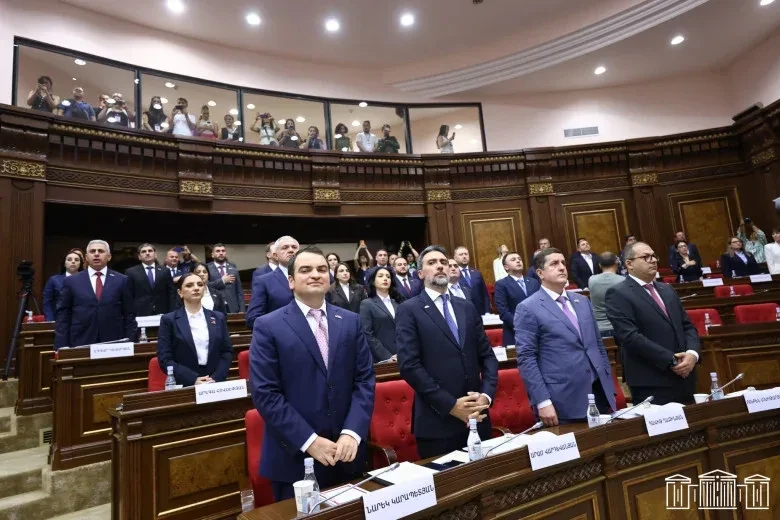
On the one hand, Russia is taking a rather tough position, understandably accelerating the issue of giving a clear answer to the geopolitical orientation issue, holding a referendum on the “EU or EAEU” option. On the other hand, Azerbaijan is continuously reminding Pashinyan that he has committed to changing the RA Constitution and holding a referendum. In the process, let us note that Pashinyan has “autonomized” Armenia so much that now whoever is not tired is forcing Armenia to hold a referendum. But let’s not get carried away. In the current situation and in the face of the predicted shocking developments, the question of what work the current opposition is trying to do, how it is positioning itself, becomes extremely important. If the Pashinyan government, which even received barely 49 percent in the last elections according to the figures they published, speaks “on behalf of the people,” then the opposition forces should not have any problems or complexes in that regard at all. Especially since even among some of those who voted for the government with administrative resources, post-election sobering tendencies are observed. The real opposition forces together received about 500-600 thousand real votes. Let's repeat, in conditions of total repression, use of administrative resources, social "benefits" with state levers and other electoral violations. And that is serious political capital. Now another opportunity for opposition forces to materialize that political capital is approaching. With the calculation that at "moment x" they will be able to assume responsibility and prevent the ship of the state from crashing into the rocks. From this perspective, "Strong Armenia" is the first to come into focus. Naturally, it is very important what position the largest opposition force in parliament has,how it manifests itself. Of course, “Strong Armenia” also has active representatives held hostage, the authorities have “cases” against perhaps more than half of the representatives of the faction. At the same time, the leader of this force, Samvel Karapetyan, continues to remain under house arrest. Nevertheless, “Strong Armenia” can play a significant role in organizationally uniting the capabilities of other opposition forces, coordinating them, and promoting real cooperation. Let's face it, objectively, the oppositionists have more reasons to unite or coordinate their actions than vice versa. As for purely parliamentary events, representatives of both opposition factions are active.
In the case of the “Armenia” bloc, it is clear that there is a lot of experience here, and in the case of the newly formed force that entered parliament for the first time, “Strong Armenia”, it is clear that it has more than enough trained and noticeable personnel to be more active. For example, Davit Ghazinyan, Tigran Abrahamyan, Hayk Farmanyan, Ruben Mkhitaryan, and other deputies, and of course, the speeches of the faction leader Narek Karapetyan and the activities he has carried out in this short period of time also testify to this. By the way, it is interesting that “Strong Armenia” was quite consistent in the issue of being represented in the positions of chairmen (deputy chairmen) of the NA standing committees, available with the “opposition quota”. This is despite the predictable reality that the ruling majority “torpedoed” the selection of candidates nominated by “Strong Armenia” several times.
In any case, the main workplace of the opposition in the near future should not only be the parliamentary podium and microphones, but also the cities, villages, and squares of the republic. In short, we need concrete work with the people. Specifically, “Strong Armenia” has already shown in this short period of time that they will follow exactly that path. By the way, let’s not forget that local government elections are ahead. The opposition has the opportunity to “politicize” these elections. Many note that it is necessary to formulate a perceptible agenda and bring it to the widest possible masses. Considering our realities, there is also a need to do this work quickly. And for this, the main opposition forces must be able to cooperate.
We believe that the current state of “prison stagnation” may also inadvertently contribute to this.
Details in today's issue of "Past" daily newspaper