




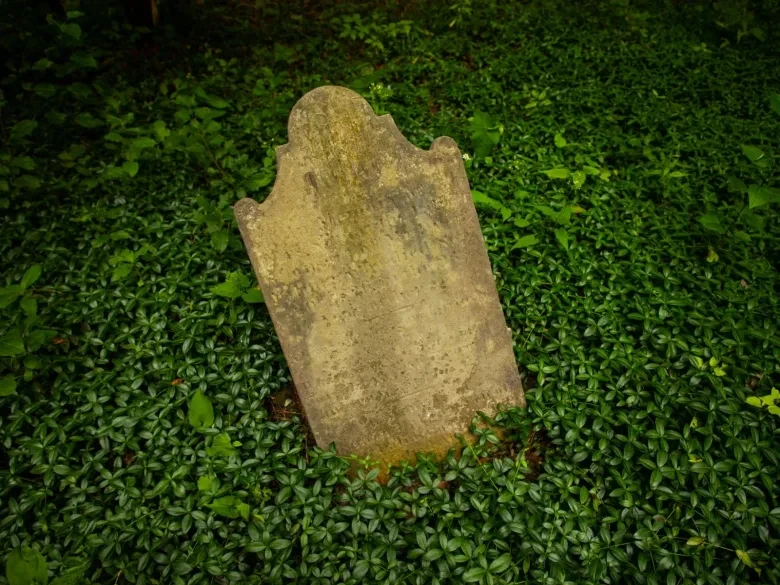
A routine cleaning in the backyard of a private house in New Orleans unexpectedly led to one of the most unusual archaeological discoveries in recent years. Daniella Santoro and Aaron Lorenz, a married couple, while cleaning the bushes near their house, found a marble slab with Latin writing, wrote Popular Mechanics.
As it turned out later, it was the tombstone of an almost two-thousand-year-old Roman military sailor, who was considered lost since the time of the Second World War.
Santoro, an anthropologist at Tulane University, initially assumed that the stone might have come from one of the old cemeteries in New Orleans. However, after contacting Ryan Gray, an anthropologist at the University of New Orleans, it turned out that the find is much older.
Scientists, together with researchers from the University of Innsbruck and Tulane University, deciphered the Latin script. It was found to be dedicated to Sextus Congenius Verus, a sailor in the Praetorian fleet of the Roman Empire who served on the battleship Asclepius. According to the text, he was originally from the Besseri tribe of Thrace, lived for 42 years, served in the army for 22 years, and the monument was erected for him by his descendants.
Another circumstance became a real sensation. It turned out that this tombstone had long been known to historians and was listed among the exhibits of the city museum of Civitavecchia, an ancient Roman port not far from Rome. After the destruction of the museum during the Allied bombings in 1943-1944, the monument disappeared and was considered lost.
After confirming the origin of the find, the FBI unit, which deals with the investigation of crimes against cultural heritage, joined the case. The stone was seized and placed in custody pending the completion of the repatriation procedure. On April 29, 2026, the tombstone was officially returned to Italy as part of the transfer of 337 cultural assets returned from the United States.
However, the main question remained. How did an ancient Roman monument end up in the garden of an ordinary American home?
Ryan Gray began researching the history of the home owners, but the investigation did not yield results for a long time. Then archaeologist Susan Lusnia from Tulane University, who was working in Italy, joined the search. He confirmed that after the liberation of Rome, units of the 34th Infantry Division of the US Fifth Army passed through Civitavecchia and stayed in the city for some time. This allowed us to assume that the tombstone could have appeared in the United States in the post-war years.
The final revelation of the secret was helped by chance. The local media reported on the unusual find, after which Erin Scott O'Brien, the former owner of the house, responded. He remembered that more than twenty years ago, he had placed the marble slab in the garden near the tree, considering it a beautiful decorative element.
It turned out that the tombstone came to him after the death of his grandfather, Charles Paddock, Jr., who served in the American army in Italy during World War II. Returning to New Orleans with his Italian wife in 1946, he kept the plaque in his home. After his death, his relatives did not know about its origin and perceived it as an ordinary decoration.
Meanwhile, the main mystery remains unsolved. Researchers have not been able to determine how Charles Paddock obtained the ancient Roman tombstone: did he dig it up himself, did he acquire it legally, or did it come to him in the chaos of post-war Italy?
Decades later, this extraordinary story came to a symbolic end. The tombstone of a Roman sailor, having traveled more than 8,400 kilometers and spent many years in the garden of a private house in Louisiana, has finally returned to the museum, next to the place where it was found almost two thousand years ago.