





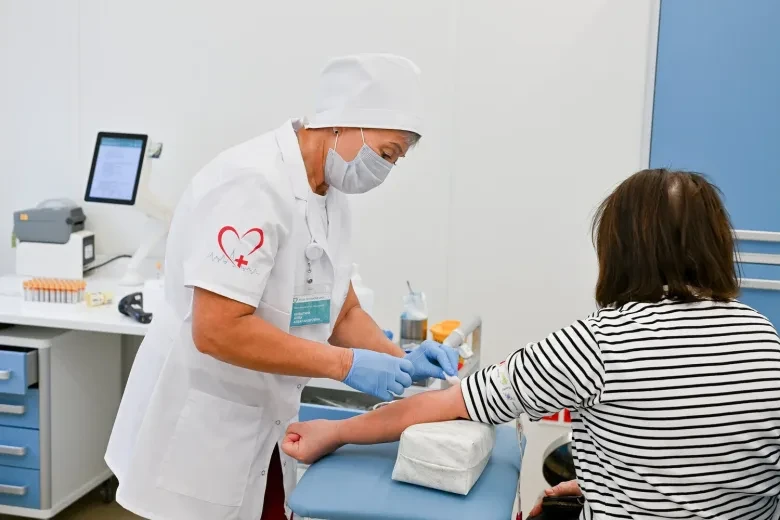
A "hidden" vein is one that cannot be felt by palpation. There are several reasons for this: thick skin, thin veins, venous spasm or fibrosis. Daria Kulkova, head of the blood and blood components collection department on Begovaya Street, explained this to Gazeta.Ru.
"The first reason is thick skin or protruding subcutaneous fat. The vein can be large and healthy, but at the same time be deeply located. It is not visually visible, and the subcutaneous fat layer interferes with palpation. The second reason is genetically thin veins with a small diameter (less than 2 mm). this is just an anatomical feature, not a pathology. The third reason is scar changes (fibrosis). Due to long-term intravenous interventions, post-injection changes in the veins cause the vein to be palpable as a hard ring, but not filled with fluid,” explained the doctor.
The fourth and most common reason, according to the doctor, is spasm (vein narrowing). A vein is not a rigid tube, but a living organ with a muscular wall. Pain, fear (adrenaline rush), cold or rough manipulation (slap, pinch) cause it to contract and retreat deep into the tissue - this is a protective reflex.
"To make the vein more visible before the intervention, work first with your hand and fingers to restore the pumping function of the veins. For example, use an expander. You can also hang your hand down. Also try to stay calm, including through special breathing techniques. Moscow clinics are equipped with the most comfortable facilities: dining rooms and lounge areas with sofas. This allows patients and donors to relax and relieve anxiety before the intervention," explained Kulkova.
To make the veins more visible in the long run, the doctor recommends regular exercise, quitting smoking and drinking enough water.