




"Fact" daily writes:
The initiative of the European Union to send a hybrid rapid response team ahead of the upcoming parliamentary elections in Armenia immediately opens up a number of profound questions covering political, institutional, information and geopolitical layers. This phenomenon, formulated at first glance as support aimed at strengthening Armenia's electoral mechanisms and information security, includes outside influence, collision of external vectors and redefining the boundaries of trust.
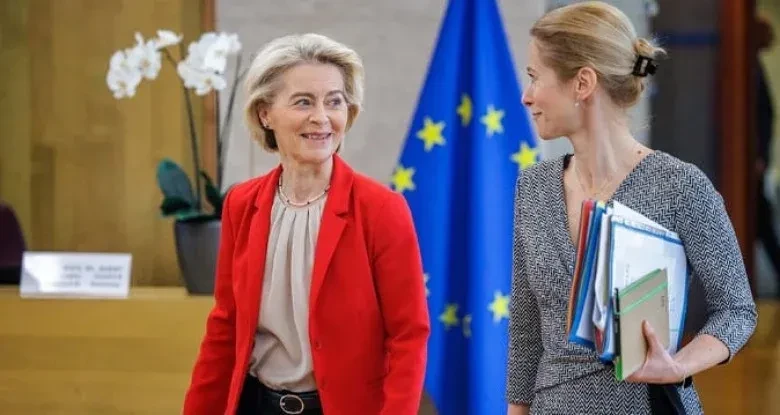
Another statement by the EU High Representative for Foreign Affairs and Security Policy, Kaya Callas, that such a group should support the Armenian Prime Minister's Office and the Security Council to counter cyber attacks and foreign information manipulation, may seem at first glance to be a step aimed at helping Armenia and developing democracy.
But in fact, it is a very controversial (to put it mildly) initiative, as it reveals a number of opposing perceptions and conflicts of interests. In today's world, the term "hybrid threat" is widely used to describe operations that combine military, cyber, information, and political toolsets without crossing the boundaries of conventional warfare. This approach has been particularly actively applied in the European political discourse, forming in recent years the perception that democratic processes, including elections, can be subject to external interference not only at the physical, but also at the informational and cyber levels.
In the framework of this, the sending of such groups by the EU to different countries is presented as a means of increasing "resistance", which was also used in Moldova in the past. That model implies capacity development of state institutions in the fields of crisis management, countering disinformation and cyber security. However, as in the case of Moldova, as well as in the case of Armenia, this initiative is perceived ambiguously, and it is the target of sharp criticism from various social and political layers.
Circles with a critical position note that there is a certain paradox here: in order to protect against external influences, another external actor is invited, which may not strengthen, but on the contrary, weaken confidence in the electoral process. According to this logic, if the electoral system is put under protection by the involvement of an external force, then the question arises: to what extent is this system independent and is it not an external influence?
This questioning is especially important for small and medium-sized states, where the question of sovereignty is often closely related to internal political legitimacy. Critics also point out that the idea of "hybrid warfare" is sometimes used as a political tool to create the perception of an external threat that can serve domestic political ends.
From this point of view, the claim is put forward that such initiatives can be used by the authorities to strengthen their own positions or limit the activities of opposition forces, referring to the danger of external interventions. This especially emphasizes the idea of "carte blanche", according to which foreign support can turn into unconditional political support, which can disrupt the competitive political field and even more, harm Armenia's democracy.
Such a reality cannot be interpreted in any other way than foreign interference in the internal affairs of Armenia. In the case of Armenia, the issue of funding by the EU and sending a special mission group before the elections also acquires a geopolitical dimension.
The country is located in a complex regional environment where different power centers have their interests and mechanisms of influence. Under these conditions, the activation of any external actor in internal political processes is immediately perceived as a geopolitical impulse. On the other hand, in reality, the possibility of a hybrid threat is exaggerated, the EU, together with the current authorities of Armenia, invents it, mythologizes it, creates the image of a "hybrid" enemy, and then shows that it is "bravely" fighting against it.
The EU is not interested in Armenia's democracy in general, but only in strengthening its position in the region. As a result, it turns out that in the name of combating hybrid warfare, hybrid intervention is actually being carried out.
ARSEN SAHAKYAN