





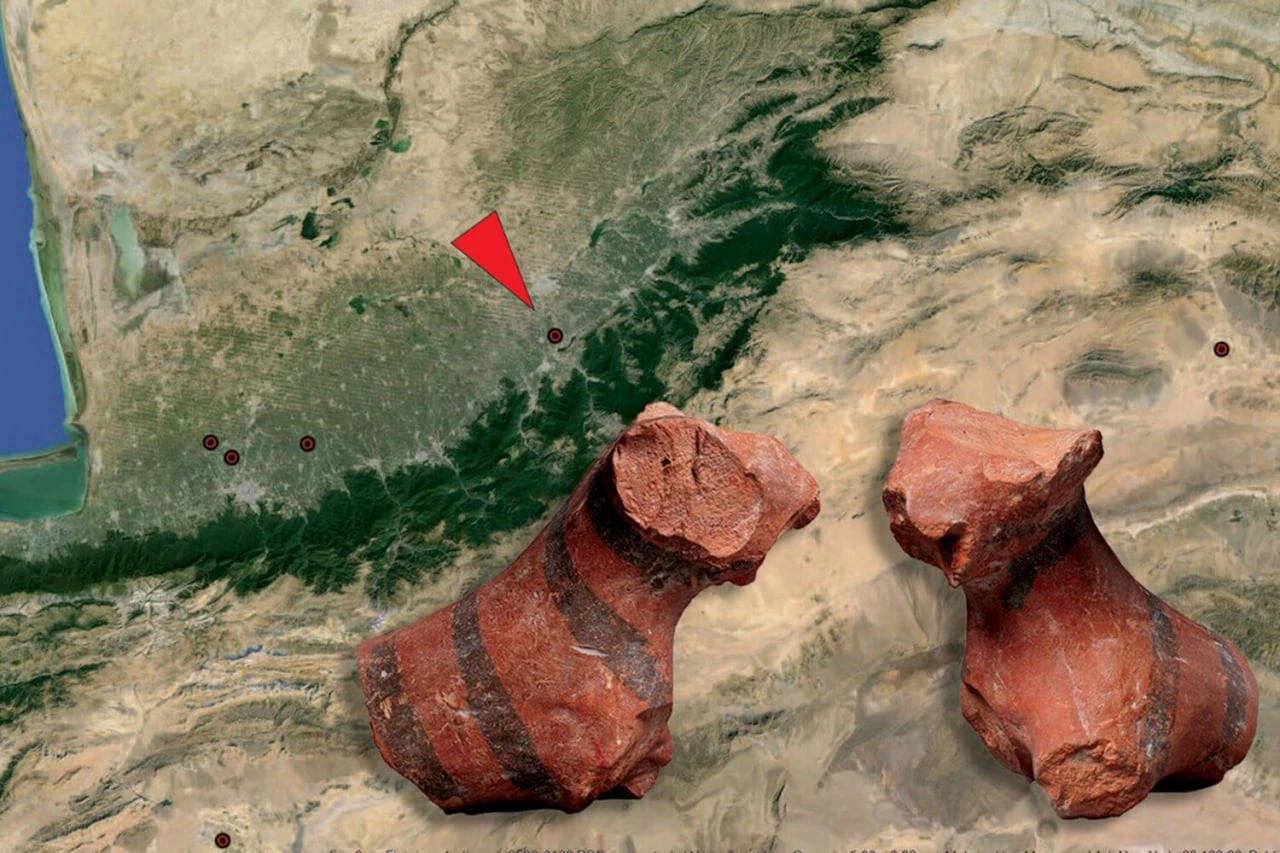
In northern Iran, archaeologists from Bryn Mawr College (USA) discovered the world's oldest image of a tiger. The more than 5,000-year-old ceramic figurine was found in Yarim Tepe (Hyrkania region). The results of the study were published in the journal Anthropozoologica.
As noted by the head of the study, Henry P. Colburn, the find predates all known depictions of tigers in Iranian art by nearly three millennia. This may indicate a much deeper and older connection between tigers and Iranian cultural identity.
The small figurine, about eight centimeters long, is made of clay with characteristic stripes that mimic the coloration of a tiger. It dates back to the Late Chalcolithic period, around B.C. 3500-3100 years. Colburn notes that the craftsman who created the figurine clearly had a first-hand understanding of the animal's appearance. This suggests a possible coexistence of humans and tigers in this region.
Hyrcania, where the statuette was found, is a forested region between the Elbrus Mountains and the Caspian Sea. In ancient times, it was inhabited by red deer, wild boars and Turanian tigers (Panthera tigris virgata), the last of which became extinct only in the 20th century.
Although similar pottery has been found at other ecological sites in the region (Shah Tepe, Tureng Tepe and Tepe Hisar), no similar animal images have been found there. This makes the Yarim Tepe find unique in the archeology of the entire region.
If the dating is correct, the Yarim Tepe statuette becomes not only the earliest representation of a tiger in Iran, but also one of the oldest such representations outside the Indian subcontinent in human history.
In addition to historical and artistic value, the statuette can also have a deep symbolic meaning. Scholars speculate that it may be an early prototype of a symbol that would become important in Persian culture in later centuries, from Ferdowsi's epic Shahnameh to depictions of royal power in the Sassanid period.
Translation:Euromedia24.com-in: