Euromedia24 on Play Store Euromedia24 on App Sore
BNB

$870.47

BTC

$113082

ADA

$0.868816

ETH

$4608.63

SOL

$213.76

31 °

Yerevan

20 °

Moscow

45 °

Dubai

20 °

London

26 °

Beijing

23 °

Brussels

16 °

Rome

23 °

Madrid

BNB

$870.47

BTC

$113082

ADA

$0.868816

ETH

$4608.63

SOL

$213.76

31 °

Yerevan

20 °

Moscow

45 °

Dubai

20 °

London

26 °

Beijing

23 °

Brussels

16 °

Rome

23 °

Madrid

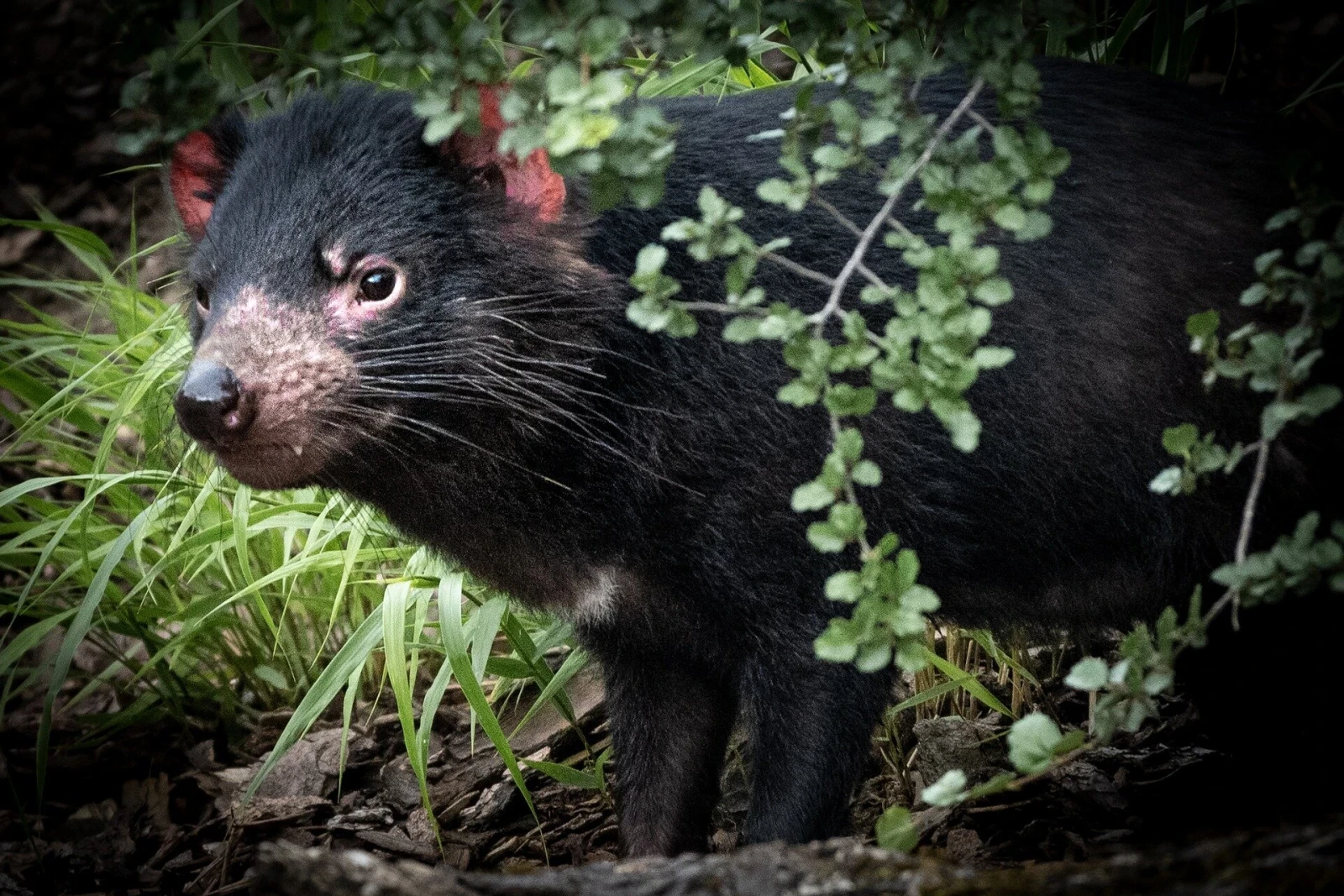
Thousands of years next to people. scientists have uncovered an unusual history of Tasmanian devils' proximity and extinction


Tasmanian devils, the largest predatory marsupials living in Australia today, lived on the country's mainland tens of thousands of years ago, including alongside human settlements, according to new research published in the journal Archeology in Oceania.

Today, these sturdy animals, about the size of a small dog, known for their powerful jaws and loud screams, are preserved in the wild only in Tasmania. However, in the past, they were widespread on the continent.

Tasmanian devils belong to the family of predatory marsupials. They mainly feed on carrion, although they can also hunt small animals, their strong jaws allow them to gnaw bones. That is why the traces of their teeth on ancient bones can tell scientists where these animals lived and what they ate.

For the first time, researchers have received convincing evidence of the presence of Tasmanian devils in the Pilbara region of northwestern Australia. Earlier, their remains were found in the south of the country, in Queensland, in the Northern Territory, in the central regions of Australia and in the west, but the Pilbara remained closed in terms of archaeological data.

The scientists studied material from the Jukan-2 rock shelter, an area traditionally owned by the Puutu Kunti Kurama and Pinikura people. People used that shelter at least 47 thousand years ago, including during the last glacial maximum.

The two fragments of their teeth and lower jaw became the main proofs of the presence of devils. One of them refers to the period approximately 42,500-47,100, the other to 6,900-7,300 years ago. Thus, animals have lived in this place for tens of thousands of years, overcoming significant changes in climate and environment.

Additional evidence was found when examining more than 8,000 animal bones found at the shelter. More than a thousand of them have bite marks. The nature of the lesions on the ten fragments studied was the closest to the tracks left by Tasmanian devils.

The scientists also studied 263 fragments of bones that passed through the digestive tract of predators. The size and nature of these remains were most consistent with the impact of a large marsupial predator such as the Tasmanian devil.

Researchers speculate that these animals may have had a special relationship with human habitations. People brought carcasses of medium and large animals to the shelter and dismembered them, leaving bones and food scraps. It is on such large bones that characteristic traces were found, which are similar to the traces of the teeth of devils. This suggests that human camps served as a predictable food source for them over the millennia.

At the same time, there is no evidence that the devils found were dismembered or used for food by humans. Most likely, the animals themselves came to the settlement in search of food scraps and could have died there.

The research also offers a new hypothesis as to why Tasmanian devils disappeared from the mainland about 3,200 years ago. Around that time, dingoes became widespread in Australia. Earlier it was believed that they could drive out devils due to competition for hunting and carrion. Now scientists assume that the competition could also have taken place directly near human settlements.

If devils have taken advantage of animal remains left by humans for thousands of years, the appearance of dingoes (predators that could also use this food source) could deprive them of their usual opportunity to find food.

Scientists are still not convinced that dingoes were the reason for the disappearance of Tasmanian devils from the mainland. But the new data points to a mechanism of competition between the two predators that has been underappreciated until now.



News

"Hraparak": Pashinyan Panicked His Teammates
Andranik Kocharyan Does Not Reconcile with New Status: Provokes Schemes - "Zhoghovurd"
We will take to the streets once and for all. We will not disclose our plans in advance. Mikayelyan (video)
In Ararat Region, an Opel Combo Hits a 75-Year-Old Pedestrian; Doctors Are Fighting for Her Life
Water Supply to Aigehat and Odzun Villages in Lori Region Will Be Stopped Tomorrow
Americans Are Paying for Trump's Adventurism: Iran's Oil Minister Responds to Bessent
Armenia Will Be Dismantled: About Changing the Constitution (Video)
Trump Promises to Recognize Congressional Election Results If They Are Fair
Important
The Ministry of Internal Affairs urges to purchase winter tires
"Trump's Son's Hunting with a Close Associate of Putin and Sensational Political News from Armenia" (video)
"Loot Gucci" and set fire to government buildings: Italy uncovers chat messages of participants in Milan riots
Parliamentary Elections Have Started in Israel
Trump Called the Summer Ceasefire in the Iran War a Waste of Time
About a dozen interrogations have been conducted; secret investigative actions are being carried out
“Hraparak”: Will members of the Civil Contract join the opposition?
"Hraparak": Military Commissar Arrested
6-7 Months of Installing Substandard Pipes, City Hall Did Not Notice, Consequences of Avinyan's Inaction: “Zhoghovurd”
"Hraparak": Gagik Khachatryan's Health Condition Has Worsened
Famous Singer Stars in a Movie
5300-year-old "Ice Man" and Other Secrets Hidden Under the Ice (Photos)

More News

...

When Journalism Becomes Propaganda: Whitewashing Azerbaijan’s Record in Artsakh․ Armen Ayvazyan

Scientists have discovered a substance in grapes that can stop one of the common diseases

The Sun, the Moon and Human Victims. the scientist revealed the terrible secret of the ancient calendar (video)

Not just books. scientists have discovered the unexpected impact of libraries on life

Silver from Germany, Sweden and the Islamic world. The largest treasure of the Viking Age has been discovered in Finland

Cancer cases could increase by 67% by 2050

Three pools and a sauna: Luxurious baths of Roman emperor discovered in Serbia

Ancient DNA dispels the myth of the "American cheetah"

"Galileo's creation": Scientist discovers mysterious description of 17th-century telescope

Not just with the sword: millions of ancient coins show how Rome integrated conquered lands

Why do mosquitoes bite some people more and others less?

New discoveries in the "Old Khndzoresk" historical and cultural reserve

Coffee has been found to have important beneficial effects on the elderly

Which cities are more suitable for parents and which for singles? scientists have found notable differences

Impressive shots, casualties and personal connections. scientists have discovered what attracts the world's media to disasters

From nine butterflies to thousands. how one of the rarest species was saved from extinction (video)

Ancient painters added blood to the paint. a possible explanation for the durability of the Huashan paintings has been discovered

Roman-era mass grave containing remains of 129 men discovered under soccer field in Vienna

Armen Ayvazyan about his book. "Weak allies often have to face their own fate." 300 years of history is repeating itself

Scientists have discovered a mushroom that causes similar hallucinations in people from different countries