




"Fact" daily writes:
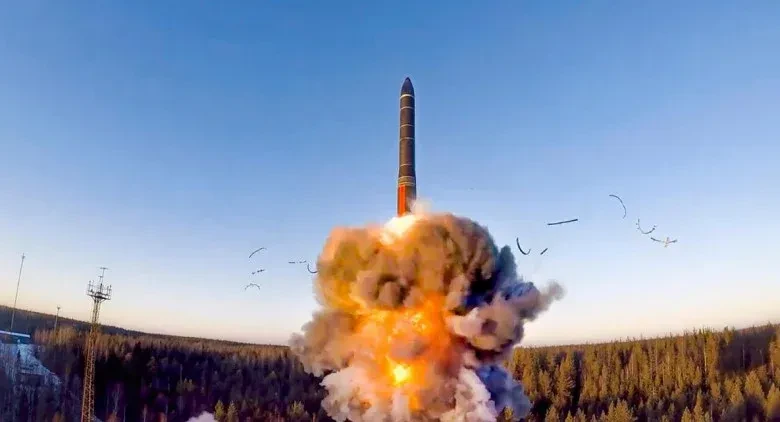
February 5 marked the expiration of the historic New START treaty between the Russian Federation and the United States of America, which limited the number of strategic nuclear warheads in the hands of the two largest nuclear powers and was one of the last major nuclear arms control instruments still in place between the two countries. If the parties fail or are unwilling to extend this treaty or come to new agreements, then for the first time in more than fifty years, Moscow and Washington will find themselves in a situation where their hands are free in the nuclear field, and no international obligations will limit the unpredictable growth of their nuclear potential.
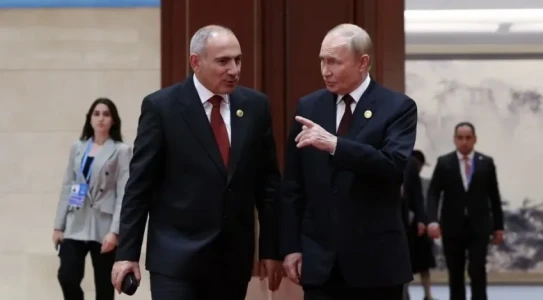
Moscow formally "suspended" the New START treaty in 2023 in response to significant U.S. military and economic assistance to Ukraine, which the Kremlin viewed as indirect U.S. involvement in the Russian-Ukrainian conflict and a threat to Russian national security. Washington also responded with appropriate measures, effectively freezing the treaty and suspending information sharing and inspections under it, although the treaty remained formally in force and its legal action did not formally cease. In recent months, the President of the Russian Federation, Vladimir Putin, took the initiative and proposed to maintain the main provisions and restrictions of the treaty for another year, including the crucial condition that the number of nuclear warheads ready to strike in the hands of each country cannot exceed 1,550 units.
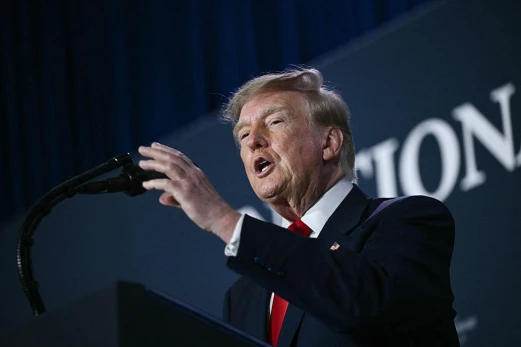
US President Donald Trump initially showed a positive attitude towards this proposal of the Kremlin and expressed his willingness to continue the dialogue, but the parties have not yet transformed this proposal into a legally binding official agreement and have not adopted a specific contractual document that will ensure the continuation of these restrictions.
There is currently no clear sign or trend that the key provisions of the treaty will be extended, or that the parties will reach an informal agreement that would ensure continued limitation of nuclear arsenals, meaning that increases in the number of nuclear weapons warheads by both powers would become a reality. Moreover, even last year, the US President announced the possibility (intention) of resuming nuclear tests, and one of his justifications was the claim that Russia, North Korea and China are conducting nuclear weapons tests. In fact, a very worrying situation is being created that if the international mechanisms for the control and limitation of nuclear weapons do not work and a field is not opened for new negotiations, then other nuclear powers and countries seeking to acquire weapons will start their own nuclear tests and unprecedented expansion of nuclear arsenals with great speed and intensity, because no one wants to be in a disadvantageous strategic position. The resumption of the nuclear race with all its momentum becomes inevitable if the international community and major powers do not take urgent and effective steps to prevent and resolve this crisis. And that new race will bring with it new challenges, risks and unforeseen consequences. For decades, limiting the nuclear arsenals of Russia and the United States has ensured a strategic balance and contained the risk of direct military conflict between the great powers. But the elimination of that restriction creates conditions for breaking the established balance. The U.S.'s already expensive, massive budget commitment and behind schedule major nuclear arsenal modernization program, which involves replacing thousands of nuclear warheads, ballistic missiles, missile submarines and strategic bombers with new-generation systems, is setting the stage for China to also accelerate and expand its own ambitious nuclear weapons build-up, largely aimed at creating a strategic balance against the West. powers.
If the restrictions of the New START treaty are lifted, Russia could also add additional warheads to its arsenal, increasing its strike-ready arsenal by about 60 percent. On the other hand, one of the reasons for the increasing reluctance and limited interest of the US in recent years towards limiting nuclear arsenals is the emergence of a third nuclear superpower, which can be transformed into a real strategic challenge. When the New START treaty was negotiated and signed in 2010, very few people were seriously concerned about it, because at the time China was still considered a second-tier nuclear power with limited potential. However, the biggest, most important and most unpredictable change in the international geopolitical landscape from the point of view of nuclear weapons in recent years is the resurgence of China and its manifestation in the form of a challenge to the United States of America and the Russian Federation, possessing the two largest and most powerful arsenals of nuclear weapons in the world. China has invested enormous funds and resources over the past decade to increase its total number of nuclear warheads, improve the technological quality of its ballistic missile systems, and diversify its strategic supply projects.
In a 2022 official report, Pentagon experts and analysts estimated that it is very likely that China will have approximately 1,500 warheads by 2035, which effectively means that China will reach the quantitative level now set by the New START treaty for Russia and America. And this fact creates a new, more complex and multi-layered context and perception, especially in the exceptional conditions that, in parallel with the continuous increase of China's economic potential and influence, this state is seriously considered by the community of global political and economic analysts in the long term as the powerful geopolitical center, which with its economic, technological, military and diplomatic resources is able to challenge the dominant positions of the United States in international relations.
It turns out that the nuclear race has gone beyond being a bilateral issue that could be resolved within the framework of dialogue and relations between the US and the USSR or the US and Russia, and now includes a third player whose economic power and technological potential allow it to reach commanding positions in a number of fields.